This post contains Amazon affiliate links. If you buy through one, I earn a small commission at no extra cost to you. It never changes what I write about a book.
Author: Amit Choudhari
Publisher: Notion Press
Summary
Unsent Letters from Yesterday feels like a quiet conversation about love, time, and longing. It reminds us that some relationships may pause, drift apart, or remain unsaid, yet they continue to exist in the spaces between memory and hope.
Review
“Because some goodbyes are more sacred when left whole.”
Some books feel like love letters. They quietly fill us with hope, make us believe in love again, and remind us that love needs patience. Love does not always require presence, sometimes it simply needs faith. Love does not always need a name; it simply exists. And Unsent Letters from Yesterday beautifully captures that emotion.
Unsent Letters from Yesterday by Amit Choudhari is the story of Sumit and Sharda – two souls whose paths diverged in youth. Years later, when they cross paths again, life has changed for both of them. Their journeys have taken different turns, their worlds are no longer the same, but what remains unchanged is the bond they once shared and the memories that never truly faded. It is a story not just about reunion, but about the quiet persistence of emotions that time could never erase.
Also Read: Book Review: The Greatest River by Namita Moolani Mehra Illustrated by Khoa Le
The story unfolds gracefully with an engaging plot, crisp descriptive narrative, and a captivating writing style. Amit Choudhari takes us into the lives of Sharda Joshi and Sumit Deshpande – their dreams, their struggles, the lives they built, and the quiet absence they carried while missing each other.
Set against the lively yet chaotic city of Pune, the story feels even more immersive and grounded in reality. The city itself almost feels like a silent companion to their story – witnessing their memories, their distance, and their reunion. What makes the story even more special is that Sumit and Sharda rediscover companionship at the age of 55 and the letters they write to each other.
Each letter feels like a small window into their hearts. With every letter, we discover a petal of their emotions, their reflections, and the moments they carry from the past. Slowly, the story blossoms through these exchanges and a heartfelt story grows with every chapter. In a world that moves quickly through instant messages and fleeting conversations, these letters feel deeply intimate and we could feel their emotion with every exchange.
Interestingly, Sumit and Sharda never make grand promises to each other. They never try to define their relationship or label what they share. Yet what remains between them is something deeply sacred — a quiet understanding that time could not erase. We witness the distance between them, their separate lives, the people they meet along the way, and the quiet longing that never disappears. It reminds us that love does not follow a timeline. Sometimes it quietly waits through decades, patiently finding its way back.
The characters are beautifully written. Sumit and Sharda are naturally the heart of the story, but another character quietly adds warmth to the narrative – Suresh from Café Good Luck. As a silent observer of their story, his presence feels comforting, like someone witnessing a love that unfolds gently over time. He becomes the quiet keeper of their story, someone who sees their bond grow without ever interfering with it. What I especially enjoyed was how the story explores the way Sumit and Sharda share their bond with their respective families and how they eventually take control of their own lives. Their journey is about choosing to feel alive again, choosing each other, but also choosing themselves this time.
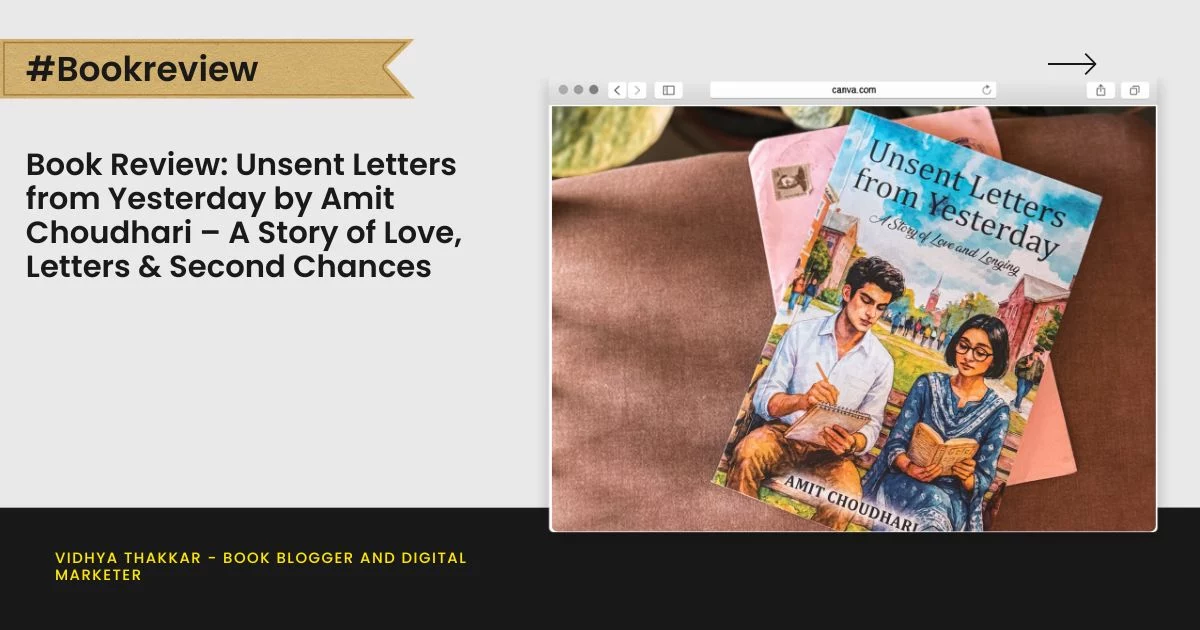
The book carries many emotional layers and often feels like a rollercoaster of feelings. One beautiful element in the story is Sumit’s sketches of Sharda and the moments he captures through his art. Through these sketches, we see how love can live quietly in observation, in the way someone watches, remembers, and preserves moments. Not to forget, the sketches included in the book themselves subtly give us the gist of the story, adding a visual layer to the narrative. In many ways, art and letters become their language – a silent form of conversation that keeps their connection alive.
The final chapters build a wonderful sense of curiosity. You keep wondering what Sharda will ultimately choose, how Sumit will react, and how their journey will unfold. One particularly touching moment is when Sumit discovers a letter from his father – a moment that adds yet another emotional dimension to the story. That moment beautifully ties together themes of memory, family, and the legacy of love across generations.
There were moments where the story felt a little slow and slightly casual in its progression. The narrative takes its time, which might make some parts feel less eventful. However, this slow pacing also reflects the nature of the story- gentle, reflective, and focused more on emotions than dramatic twists.
With so many emotional threads woven together, Amit Choudhari handles the narrative beautifully. The story does not rush its emotions; instead, it allows them to unfold slowly, much like the letters that shape it. With its engaging storyline, heartfelt emotions, and warm narrative style, Unsent Letters from Yesterday feels like a quiet conversation about love, time, and longing. It reminds us that some relationships may pause, drift apart, or remain unsaid, yet they continue to exist in the spaces between memory and hope.
It is the kind of book you would enjoy reading on a cozy afternoon – slowly, with a cup of tea, letting each page linger a little longer in your heart. If you enjoy stories about second chances, quiet love, and emotions preserved in letters, this book will gently find its way into your heart.
Get your Book Reviewed by Vidhya Thakkar – Connect us Now