This post contains Amazon affiliate links. If you buy through one, I earn a small commission at no extra cost to you. It never changes what I write about a book.
About the Author
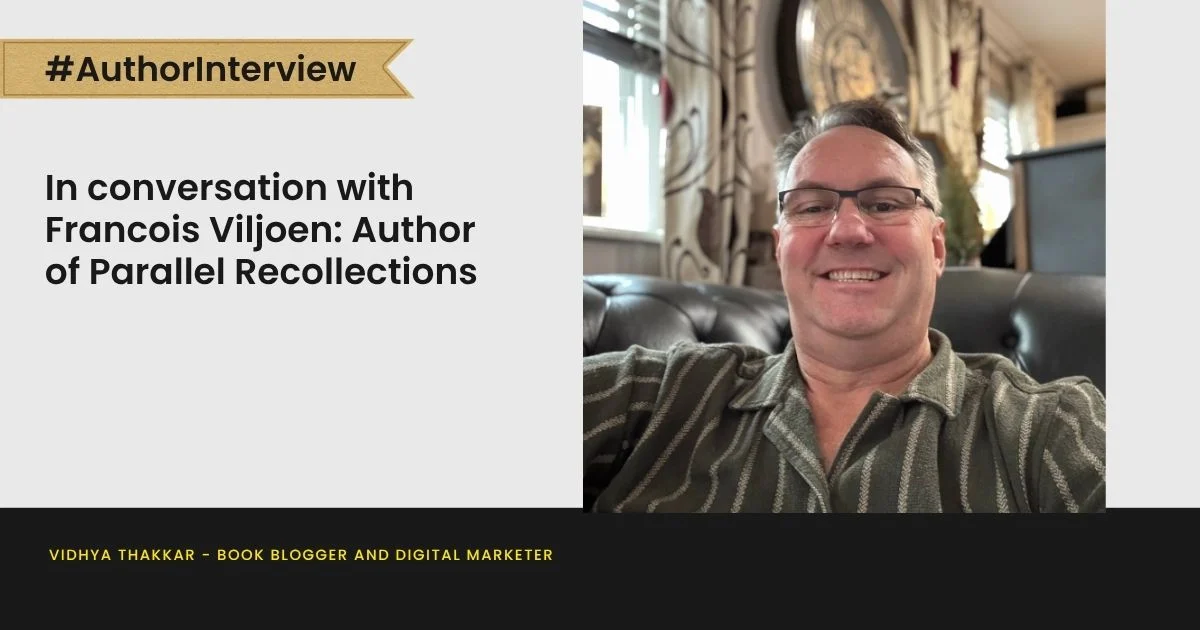
Francois Viljoen is a novelist whose fascination with the complexities of human nature finds expression in stories that challenge perception and explore the unexpected connections between memory, identity, and consequence.
With a background spanning computer science, technology management, and more than two decades in the software and supply chain industry, Viljoen has spent much of his professional life working with complex systems where seemingly separate events can be connected in surprising ways. That perspective informs his fiction, where the obvious explanation is not always the complete one, and the past can hold consequences that reach far beyond what anyone anticipates.
His debut novel, Parallel Recollections, reflects his interest in the darker corners of the human mind and the unsettling possibilities that emerge when memory, identity, and reality collide. Originally from South Africa and now based in the United Kingdom, Viljoen brings an international perspective to his writing. Outside his professional and literary pursuits, his passion for photography reflects a similar interest in looking beyond the surface to capture the emotion and story within a moment.
He is drawn to stories that linger in the reader’s mind long after the final page: stories that leave questions worth considering and challenge readers to look at familiar things differently.
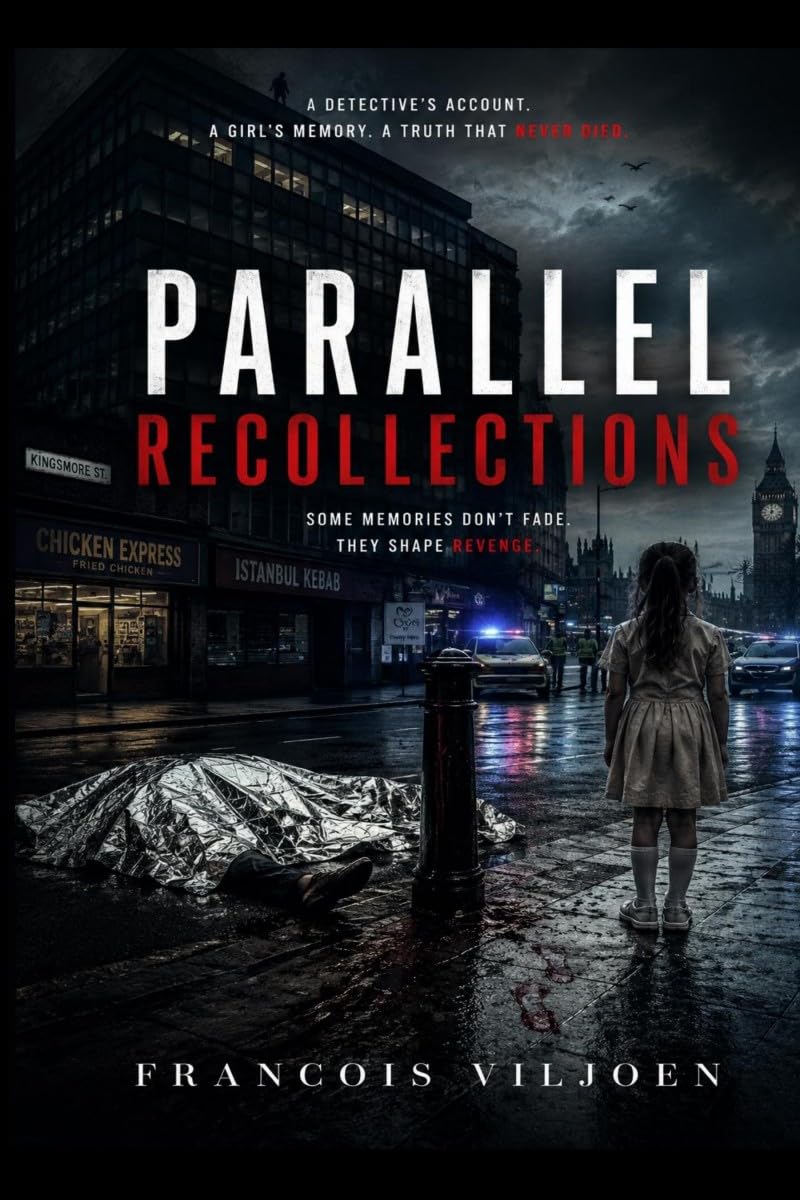
Get your copy here: https://link.amazon/B0bWC5SVS
Interview
Q) Parallel Recollections brings together crime, trauma, memory, and psychological suspense. What inspired you to write this story?
Firstly, Vidhya, let me express my gratitude for this Author Spotlight opportunity. To be honest, there are two main factors involved. First, the significant event that happens to the young Malory Carter had been in my mind for a long time. I visualized it as a film scene in which cellular fusion occurs, and her white blood cells immediately start protecting a part of Gabriel. I knew that would give me so much to work with, as it would be the origin of one person having two sets of memories. Combining elements of being both male and female, both young and old, and both innocent and a killer made it a story waiting to be written. Second, the concept for the book began as a film. I visualized every chapter as a scene and then wrote it down in words. This made writing easy. I just write what I saw.
Q) Malory’s past plays an important role in shaping her character. What was the most challenging part of developing her journey?
What happened to her as a child continued to develop within her as she grew older. It was challenging to determine which parts of her development reflected normal adolescence or a typical teenage phase, and how the recollections of an adult man would influence them. I ultimately developed Malory Carter so that her growth was not linear at all. Sometimes Gabriel had the upper hand, and at other times she fought back. This is the first and possibly the biggest conflict in the book: is it Malory or Gabriel? And the answer – is always yes!
Q) The book explores the idea that memories may not always be reliable. What drew you to explore the connection between memory, identity, and truth?
The reality is this: what we experience in the past shapes us profoundly. Touch something hot, and the memory of the pain will make you avoid doing it again. Remember the taste of a nice apple you once enjoyed, and you will buy the same kind the next time you are in the shop. Now imagine having two sets of memories in one mind, one built up by a psychopath and the other by a developing young girl. That would be the identity challenge of the century. One thing Malory never doubted, however, was that both sets of memories were true. She remembers her school, and revisiting it proves those memories are real. Through Gabriel, she also remembers a storage unit filled with weapons and files. When she gets there, she knows those memories are real too.
Q) Malory and James come from different worlds, yet their stories eventually intersect. How did you approach developing their characters and connecting their journeys?
This is a good question. When I started writing the story, James was only going to be the investigator, someone with a different point of view who could give the reader a factual and analytical account. Then it struck me that pulling him back into the Malory murders years later would provide a parallel set of viewpoints that binds the story together. This worked incredibly well. James Harlan becomes an increasingly important part of the book, and his role grows even further in the sequel to Parallel Recollections, The Aftermath.
Q) The story unfolds through multiple perspectives and interconnected events. How did you structure the narrative while maintaining suspense?
I am not going to lie to you. This was tough. The opening chapters took months to get just right. What should I resolve in each chapter, and what should I leave with the reader? When should I resolve it? What should I reveal, and what should I withhold? It started to fall into place naturally after I had fully developed the characters. A mother and a father will tell the same story differently, and a boyfriend will provide a very different perspective altogether. Looking at the different characters who tell their versions of what happened was what made it all come together. I developed the narrative separately, while keeping the events fixed in time.
Q) Gabriel Varga is an intriguing character in the story. What inspired his character, and what did you want him to contribute to the larger narrative?
Gabriel’s character emerged from the fact that he, too, witnessed something horrific when he was young. Over time, shaped by the trauma he witnessed, he developed into the person he became. He acted from a good place but did horrible things, and the way he lives on is at the core of the story. By design, his history becomes half of the main character.
Q) The book explores justice, morality, and the complexities of human behavior. Is there a particular message you wanted readers to take away from the story?
Absolutely. Consider why people do what they do, not only what they do. That leads to a better understanding of one another. This is what James did in the end.
Q) The climax brings together several unexpected revelations. Did you have the ending planned from the beginning, or did it evolve during the writing process?
The ending was always going to be unconventional. If I was going to write a book, I was not going to follow a standard plot. I planned this part carefully, and it changes some of the motivations of characters earlier in the story. If the murders had been committed out of hatred or revenge, the plot would not have worked. It works because the driving force behind all the murders is rooted in one thing: mercy.
Q) Psychological thrillers often blur the line between perception and reality. How did you balance the psychological elements with the crime investigation?
For me, the key was to make the psychological elements and the crime investigation inseparable. In Parallel Recollections, the mystery is not simply about discovering who committed a crime, but about understanding how memories, identity, and perception can shape a person’s understanding of reality. I wanted readers to experience the uncertainty alongside the characters, questioning what they believe they know while still having tangible crimes at the center of the story. The investigation provides the structure and forward momentum, while the psychological elements create doubt, tension, and unexpected possibilities. The challenge was to give readers enough evidence to follow the investigation without making the answers too obvious. I wanted them to form their own theories, reconsider their assumptions, and wonder whether the truth was quite as straightforward as it first appeared. Ultimately, the balance comes from ensuring that the psychological twists are not simply there to surprise the reader but are integral to the crime itself and to the characters’ motivations.
Q) Was there a particular character, scene, or moment in Parallel Recollections that was especially challenging or memorable for you to write?
The visit to Juliet is the moment that stands out. It is loaded with emotional hooks: a woman visits a dead man’s mother, knowing very well that she is taking part of him home with her. It was risky to write, but very rewarding. She allows the mother to connect with her dead son one last time. In doing so, the mother finds closure and then dies peacefully herself. Powerful stuff!
Q) If you could describe Parallel Recollections in three words, what would they be, and why?
Unconventional. Intriguing. Unsettling. These three words describe the narrative, the complexity of the story, and the ending of the book.
Q) How did your writing journey begin, and what inspired you to become an author?
I struggle to give a definitive answer to this question. I suppose writing was always part of me, but I almost waited too long to begin. I am glad I finally got started.
Q) What has been the biggest challenge you’ve faced as a writer, and how have you overcome it?
Making sure my readers do not trip over the words in my stories. I tried writing without a fixed method and struggled. Then I started listening to the words with my eyes closed. If my mind could drift into the story, I knew the words were working. If I had to stop and think about what I heard, I would pause and revise them.
Q) How has writing Parallel Recollections influenced your approach to storytelling, and can readers expect more stories in this genre from you?
I stopped trying to tell readers the story and started letting them feel what they would feel if they were there. That approach works very well. Yes, the sequel, Parallel Recollections: The Aftermath, launches soon!
Q) What has your journey as a writer taught you about yourself, and what would you like to say to readers who are about to pick up Parallel Recollections?
It taught me that I can start with nothing and produce an entire book. This was incredibly rewarding. To readers who are about to pick up Parallel Recollections, I would say this: be ready to be challenged profoundly!
Get your Book Reviewed by Vidhya Thakkar – Connect us Now
Frequently Asked Questions (FAQs)
1. Who is Francois Viljoen?
Francois Viljoen is the author of Parallel Recollections, a psychological thriller exploring memory, trauma, crime, identity, and the complexities of human behaviour.
2. What is Parallel Recollections by Francois Viljoen about?
Parallel Recollections follows Malory Carter, whose life is shaped by a traumatic incident, and Detective James Harlan, whose investigation into seemingly unrelated crimes leads to unexpected connections and revelations.
3. What inspired Francois Viljoen to write Parallel Recollections?
In this author interview, Francois Viljoen discusses the inspiration behind Parallel Recollections, its unusual exploration of memory, and the creative process of developing a psychological thriller.
4. What makes Parallel Recollections different from other psychological thrillers?
Parallel Recollections combines crime, suspense, trauma, and an unusual exploration of memory. Its multiple perspectives, interconnected events, and unexpected revelations make it an intriguing read that goes beyond a conventional crime investigation.
5. Does Francois Viljoen discuss his writing journey in this interview?
The interview includes questions about how his writing journey began, the challenges he has faced as an author, his storytelling process, and his message for readers.