This post contains Amazon affiliate links. If you buy through one, I earn a small commission at no extra cost to you. It never changes what I write about a book.
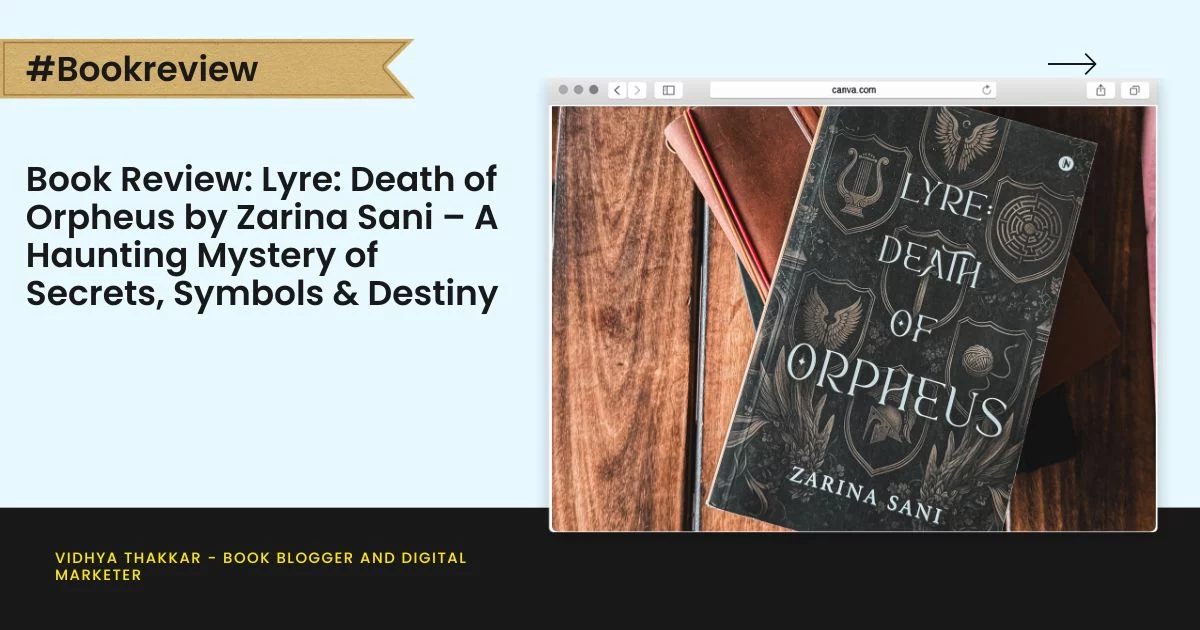
Author: Zarina Sani
Publisher: Notion Press
Summary
Filled with riddles, emotional depth, mythology-inspired intrigue, and an atmosphere of constant unease, Lyre: Death of Orpheus is a slow-burn mystery that gradually pulls readers into its dangerous game and refuses to let go till the very end.
Review
“And the game shifted, just enough for those paying attention to feel it.”
After spending a lot of time reading romance and non-fiction lately, I was craving a mystery thriller that would completely pull me into its world and Lyre: Death of Orpheus by Zarina Sani did exactly that. This is the kind of story that slowly wraps itself around you with riddles, hidden meanings, patterns, prophecies, and unsettling secrets until you find yourself constantly trying to piece everything together alongside the characters. What makes the story even more immersive is its mythology-inspired atmosphere that gives the narrative a haunting, almost timeless feeling throughout. The palace of Knossos, the references to ancient prophecies, and the symbolic clues scattered across the story make it feel like the past itself is quietly watching every move the characters make.
Set in the vivid and haunting palace of Knossos, the story follows Ariadne, who is devastated and disturbed by the mysterious death of Orpheus. But grief is not the only thing consuming her, she believes Orpheus left behind hidden messages and clues meant for someone he trusted. What begins as a search for answers soon turns into a dangerous investigation filled with cryptic symbols, repeating patterns across generations, ancient prophecies, and the terrifying realization that someone has been manipulating events from the shadows all along. The narrative keeps the tone of curiosity alive throughout, making readers constantly question who the murderer is, why these crimes are happening, and what larger prophecy connects everything together.
Ariadne’s emotional state is one of the strongest parts of the story because her investigation does not come only from curiosity, it comes from grief, desperation, and an obsession with uncovering the truth. At times, it feels like solving the mystery becomes the only thing keeping her emotionally grounded, which adds an intense psychological layer to the narrative. Her emotional unraveling subtly mirrors the unraveling of the mystery itself, which makes her journey feel deeply personal rather than simply plot-driven.
Ariadne, along with Perseus, Selene, and later Atalanta, begins uncovering disturbing truths piece by piece. And one of the strongest aspects of the book is how Zarina builds tension not just through murder and suspense, but through uncertainty. Every clue feels significant. Every symbol feels like it carries a deeper meaning. There’s this constant feeling that the characters are only seeing fragments of a much larger picture, and that atmosphere of unease stays throughout the story. The riddles and clues actively shape the pacing of the novel. Every revelation slows the characters down just enough to make them question what they previously believed, while simultaneously pushing the story forward with even more urgency and danger. That balance between discovery and tension keeps the mystery engaging throughout.
The writing style is immersive and cinematic. The beginning is definitely slow-burn, and the first few chapters take time building the world, mystery, and relationships, but once the story settles into its rhythm, it becomes incredibly engaging. The clues begin connecting, the tension rises, and the narrative constantly keeps you questioning who can actually be trusted.
What I personally enjoyed most was the mythology-inspired storytelling blended with the emotional vulnerability of the characters. Beneath the murder mystery and thrilling investigation, the story also explores grief, heartbreak, trust, friendship, love, and the emotional exhaustion that comes when someone is forced to rebuild themselves after loss. Another aspect that really stood out to me was the idea of history and destiny repeating themselves. The recurring symbols, patterns, and generational connections create this unsettling feeling that the characters are trapped inside a cycle much larger than themselves, almost as if the past refuses to stay buried. That recurring sense of inevitability adds depth to the mystery and makes the revelations feel even more impactful.
The emotional weight beneath the mystery is what makes the story stand out because the investigation is not simply about finding a murderer. It is also about confronting loss, betrayal, fear, and the emotional scars left behind by the past. Even during its most suspenseful moments, the story never loses its emotional core. This emotional depth prevents the novel from becoming a conventional thriller and instead gives it the texture of a character-driven psychological mystery. I also appreciated how Zarina balances heavy themes with moments of humor and emotional softness. It keeps the story from becoming overwhelmingly dark while still maintaining the tension of the mystery.
The character dynamics are written beautifully. While Ariadne carries much of the emotional weight of the story, Perseus easily became one of my favorite characters. His humor and lightness bring relief during some of the heavier moments, and his presence balances the darker tone of the narrative really well. Those moments of banter and warmth make the friendships feel genuine and stop the story from becoming emotionally overwhelming. The dialogues and interactions between the characters feel natural and engaging.
The climax was honestly one of the strongest parts of the book for me because it completely shifted the scale of the story. What initially feels like a murder investigation slowly unfolds into something far more layered and dangerous. The revelations, drama, and emotional intensity of the final portions make the ending feel cinematic and impactful.
In all, Lyre: Death of Orpheus is more than just a murder mystery, it is a story about grief, destiny, hidden truths, and the terrifying weight of patterns that refuse to disappear with time. Filled with riddles, emotional depth, mythology-inspired intrigue, and an atmosphere of constant unease, this is a slow-burn mystery that gradually pulls readers into its dangerous game and refuses to let go till the very end.
Get your Book Reviewed by Vidhya Thakkar – Connect us Now