This post contains Amazon affiliate links. If you buy through one, I earn a small commission at no extra cost to you. It never changes what I write about a book.
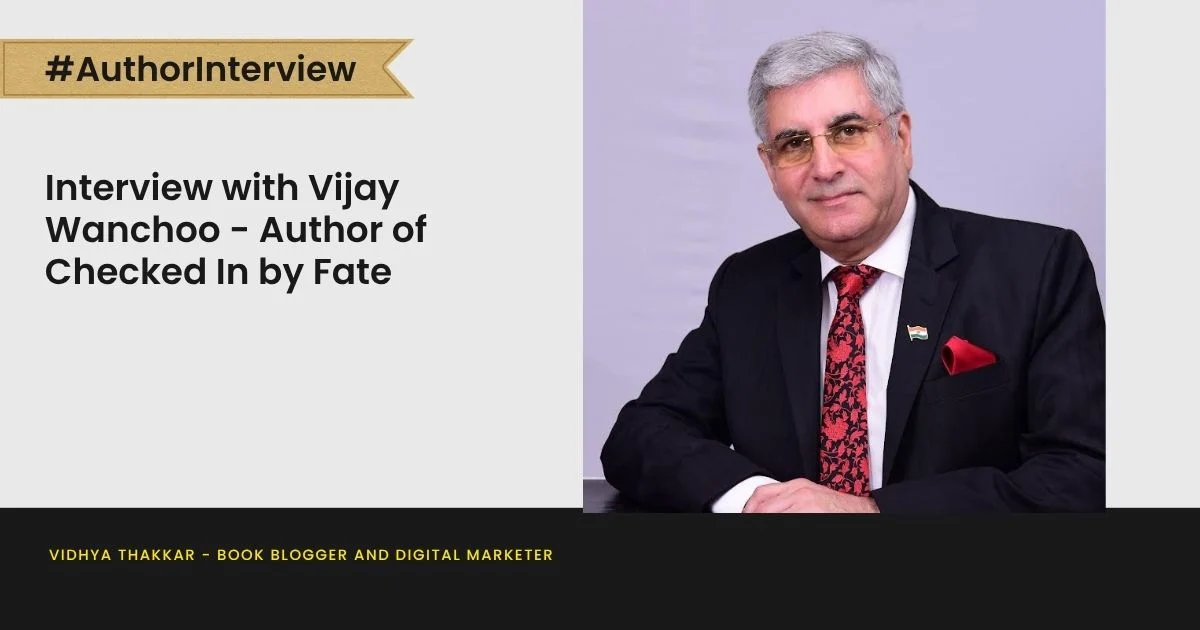
In this conversation, Vijay Wanchoo reflects on his 44-year hospitality journey, the inspiration behind Checked In by Fate, and the leadership, resilience, and life lessons that have shaped his remarkable career.
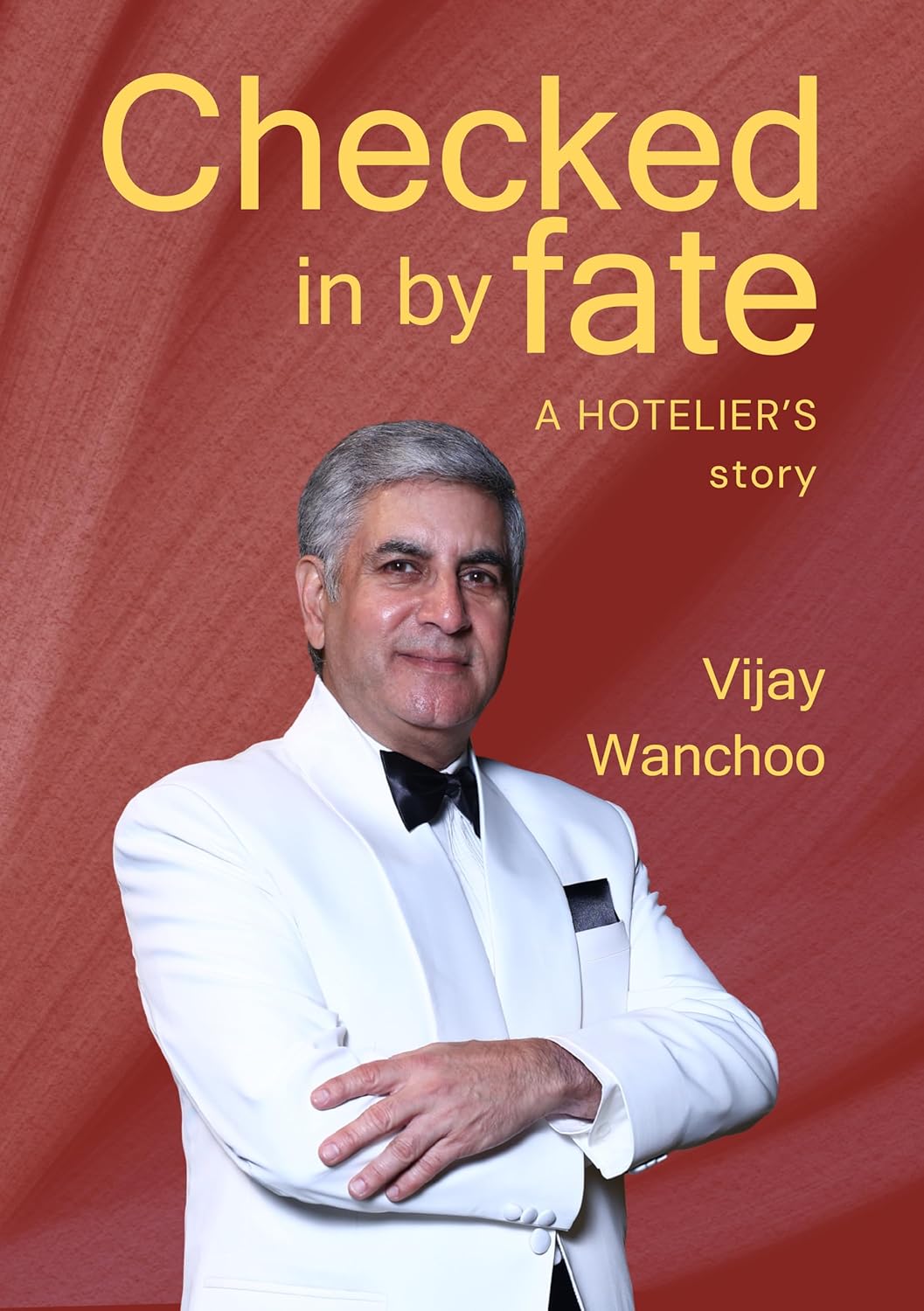
About the Author
Vijay Wanchoo is a veteran hospitality leader with over 44 years of experience in the industry. An alumnus of St. Columba’s School and the Institute of Hotel Management, Pusa, he has held leadership positions with renowned hospitality brands, including The Oberoi, The Lalit, ITC Hotels, Fortune Park Hotels, and The Imperial, New Delhi, where he served as General Manager and later managed operations for over 13 years. A recipient of several prestigious industry awards, including the Lifetime Achievement Award and the Inspiring Hotel Leader Award, he currently leads VW Hospitality, continuing to mentor and contribute to the growth of India’s hospitality sector.
Get your copy here – https://amzn.to/4y6UnnV
Also Read: Book Review: Checked In by Fate by Vijay Wanchoo | A Practical Memoir on Leadership & Hospitality
Interview
Q) Checked In by Fate reflects over four decades of your journey in the hospitality industry. What made you feel this was the right time to share your story?
It took me a long time to complete the manuscript, and I had sought help from various sources. The timing for the launch of my book at this juncture was based on two aspects. One, that it took me long as I needed assistance, being a new author and did want to do justice and ensure correctness. Secondly, I had to coordinate with many agencies and personalities and seek their blessings and testimonials as these were necessary for the impact and message which I wished to ensure/share for the reader, especially the younger budding hoteliers.
Q) While writing the memoir, was there a particular chapter or memory that was especially difficult or emotional to revisit?
I always fondly recall my formative schooling years and the time we grew up in the 70s. My father’s journey always impressed me, and I wanted to write as much I could, of his golden years as a top sportsman in Shimla in the 40s-50s. The stories I heard from him always enamored me and pulled me back to Shimla regularly, especially to the ice-skating rink in Shimla. Secondly, I also fondly recall my initiation into hospitality in 1976 as a young and immature apprentice steward. How did I manage those days I always wonder? Those memories were not always very exciting, yet ones I learnt from a great deal.
Q) One quote from your book that stayed with me is, “Attitude and aptitude will always take precedence over mere competence.” How has this philosophy shaped your leadership style throughout your career?
A positive attitude backed with reasonably good aptitude, definitely helped me in shaping my career. There were indeed many challenging situations which would pull you back. Yet, I felt that I had the resilience and resolve to get back on track.
I always tried my best to encourage team members to keep a cheerful outlook and stay positive in adverse situations. It is this aspect I felt which helped me and my team during Covid 19 days, which were rather tough and extremely challenging both physically and emotionally.
Q) How has your definition of leadership evolved from your early days in hospitality to where you are today?
The formative years in my career were very impressionable. We were young and raw and even an Assistant Manager would appear to be larger than life. We learnt from what we observed, though at times not being able to fathom reaching anywhere close to the senior management and leadership positions. Yet, with slow yet sure steps, I felt I evolved personally and honed my skills of management. Yes, the difference I tried to create was to break the mold of the traditional GM and dive into the trenches with the team. I would always be seen on the shop floor along with my people. Not that my idols did not do that, I felt I went a few steps ahead, by involving myself in all aspects be it on the sports field, or welfare activities including participating in annual days as a part of the performers groups.
Q) Looking back, what is one leadership mistake that ultimately became your greatest learning experience?
I always took pride in handling people. Though, at times there were some attitudinally challenged people, managing them was a tough task. At the leadership level it is important to differentiate between the genuine people and those who kept their selfish interest on priority and would always try to ‘butter’ up. Understanding this aspect is important and I do feel I may have misread a couple of Managers. This aspect took me time to correct, and I am glad that I sorted this at the right time.
Q)Hospitality is a people-centric industry. How do you strike the balance between leading with empathy and making difficult business decisions?
While I am a people’s person and have always been very empathetic to the team’s challenges, I have been in situations wherein I had to take certain harsh decisions, in the wake of indiscipline/misappropriation/judgmental errors or intentional wrongful acts. Here is where one had to act firmly and ensure that the correct decision is taken, which often included termination. Yes, in most cases we allowed the person to resign rather than being terminated.
On one occasion, an errant employe made a mistake not amounting to termination, I had to deduct a day’s salary. Yet, doing this made me feel empathetic and I called him over and handed him over the deducted amount much to his surprise. So on one hand, justice was done within the house rules, and hopefully on the other , it helped the employee realize his folly.
Q)Was there a defining moment that completely changed the trajectory of your professional life?
Yes. I had worked in food production and reached the level of Sous Chef, and was then offered a front-of-the-house role as Asst. Food and Beverage Manager in an upcoming 5-star hotel in 1987. This gave an impetus to my growth towards mid management which further boosted my career as an HOD and then as General Manager and Vice President.
Q) Many professionals struggle with self-doubt at different stages of their careers. How did you navigate moments when you questioned your own decisions?
Here I believe that yes, one will have self-doubt on occasions, and it is best to seek genuine advice. Yes, knowing the difference between good and bad advice is critical. It is also critical for oneself to be aware of fact that you are not sure of the answer to a problem. There are three types of people in the world:-
-Those ‘who know that they know.’ (intelligent in most areas)
-Those ‘who know that they don’t know.’ (self-aware of their weaknesses) and the third dangerous one is:-
-Those ‘who don’t know that they don’t know.’ (These are people who can spoil things). I found myself in the middle bracket and this helped me.
Q) How important has mentorship been in your journey, and in your opinion, what qualities define a truly good mentor?
As a mentee I did have the good fortune of good mentors at a later stage in life, though, a good mentor would have helped me earlier on. Here is where I felt that I had to be a good listener and observer (crucial to being a good mentor.). On a couple of occasions, I saw two errant employees showing a careless approach to work. In both cases I reprimanded them but later called them to my office and spoke to them for some time, explaining to them their mistakes. Incidentally, both later did well professionally in life.
Q) The hospitality industry has evolved tremendously over the past four decades. What are the biggest changes you have witnessed, and what core values do you believe should never change?
Yes, over the past four decades the industry has evolved hugely. The volume of the hotels had grown exponentially. In the seventies there were ten odd five-star hotels in say the New Delhi area. Today there are over sixty. Hence, the opportunities are more. Technology has evolved over the decades and in the nineties, computers changed the way we worked and added to efficiency levels.
New brands came into the scene and today all brands exist in the country. The mid segment grew and became more organized and offered reasonably priced accommodation in clean and professional environs. Bed and breakfast became popular and on the other end top luxury hotels kept getting added. Over the decades, there has been a complete shift as far as sustainability is concerned.
Opportunities for growth are ten-fold today, yet the attraction of younger generation to hotels is reducing.
In my opinion, core values and virtues of hospitality across the world are the need to maintain your people and look after them as only if the people are happy will they look after the guests with their full attention. No matter what technology is available, I believe that the basics will never change. These include a great smile, eye contact, attention to every word a customer says and beyond and the need to revert to the customer in the shortest possible period. Today the customer has several choices and can be easily attracted to the competition. How do we keep him back is the question. Here only a personalized approach works, of course, backed up an attractive commercial deal. So, the human aspects can and will never lose its significance.
Q)Technology is transforming guest experiences in remarkable ways. How can hotels embrace innovation while preserving the human touch that lies at the heart of hospitality?
You can introduce high-tech innovations in all areas. Yet, the human element can never be replaced. Airlines have taken steps in empowering the customer wherein one can check in at airports through kiosks. This is one thing I would not like to introduce in hotels. It is nice to know that one can check in to a hotel from your cab and go straight to the room and open your lock with your phone app in some hotels. Yet, where is the personal welcome or a nice smile? You can introduce automated phone responses, yet that is most impersonal. Robotic cooking should stay away from hospitality. And above all the staff training and grooming will continue to remain on top.
Q) If Checked In by Fate were adapted into a documentary or a film, which phase of your life would you be most excited to see brought to the screen?
Simple. The aspects which cover all my extracurricular activities-
Sports with the team.
Cooking for them.
My interaction with Stars and international personalities.
My modelling and filmy cameos.
And lastly the four to five stages of my scaling the professional ladder
Q)What does success mean to you today, and how has that definition changed since you first entered the hospitality industry?
At the end of the day, success is defined by the least number of mistakes you have made. This will translate into one single factor which means a lot to all hoteliers. That is, to win over all your clients, more so, the most discerning ones. Today, success may also mean the following you have on social media, though in my view, that has less importance. That is so, because social media will bring in traction, yet may not bring in customers. Yes, a small percentage of your guests may come through marketing, yet it is mostly through personal contact. Today success also gets defined by Rev Pars and growth numbers both over previous years and as compared to the competition.
Q) If readers were to take away just one lesson from Checked In by Fate, what would you hope it would be?
I have always believed that one should break the glass ceiling. Think out of the box. Be different and stay close to the ground. Read between the lines as there is much not said than is being said. It is always important to differentiate between well-wishers and opportunists.
Q) Finally, after writing this memoir, do you feel there are still untold stories or lessons that readers might discover in a future book?
The hotel industry is a vast ocean and covering all aspects completely is not possible at all. Yet, there are aspects which are already being considered. I would like to work on a project talking about the evolution of hotels and hospitality and the people who played important roles in contributing to the international hotel industry. There are lessons to be learnt from each one and this will form a good concept.
Get your Book Reviewed by Vidhya Thakkar – Connect us Now
Frequently Asked Questions
Who is Vijay Wanchoo?
Vijay Wanchoo is a hospitality industry veteran with over four decades of experience. In his memoir, Checked In by Fate, he reflects on his professional journey, leadership lessons, personal experiences, and the people who shaped his career.
Why should you read this interview?
Whether you’re a hospitality professional, an aspiring author, or someone who enjoys inspiring life stories, this interview offers valuable insights into leadership, perseverance, and the experiences behind Checked In by Fate.
What is Checked In by Fate about?
Checked In by Fate is a memoir that chronicles Vijay Wanchoo’s 44-year journey in the hospitality industry. Through personal stories and professional experiences, the book explores leadership, resilience, service, and the lessons learned throughout his career.
What can readers expect from this interview?
In this exclusive interview with Reader_viddh, Vijay Wanchoo shares the inspiration behind Checked In by Fate, his writing journey, memorable moments from his hospitality career, the lessons he learned while writing the book, and advice for aspiring writers and readers.
Is this interview spoiler-free?
Yes. The interview focuses on Vijay Wanchoo’s experiences, writing process, and insights without revealing major details from Checked In by Fate, making it suitable for readers who haven’t read the book yet.