
This post contains Amazon affiliate links. If you buy through one, I earn a small commission at no extra cost to you. It never changes what I write about a book.
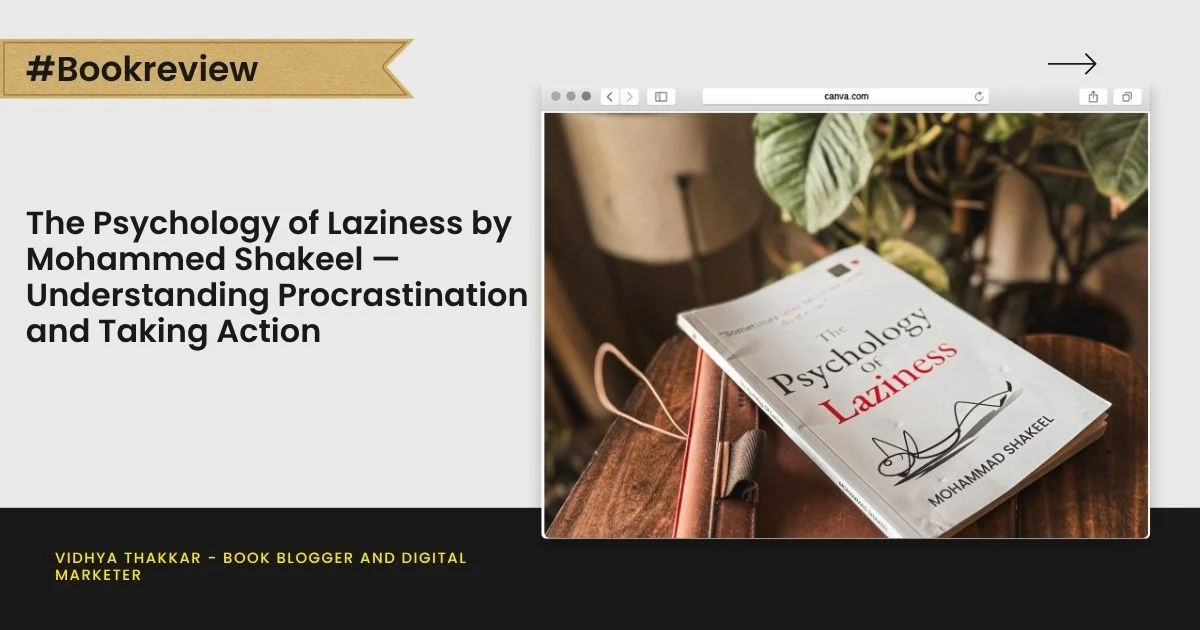
Author: Mohammed Shakeel
Publisher: Invincible Publishers
Genre: : Self-Help / Personal Development / Productivity
Pages: 90 pages
Ideal for: Readers struggling with procrastination, looking to build better habits and manage their time and attention.
Summary
The Psychology of Laziness is a short, accessible and practical read for anyone who finds themselves constantly saying, “I’ll do it later.” Because sometimes the biggest change doesn’t come from learning something new; it comes from finally acting on what we already know.
Review:
“Your mind is the actor and you are the director.”
Some books feel like reminders of things we already know but often forget in the chaos of everyday life. The Psychology of Laziness by Mohammed Shakeel is one such book. We all have things we keep postponing – a book we want to read, a goal we want to work towards, a habit we want to build or a change we keep promising ourselves we’ll make. “I’ll do it later” sounds harmless until later quietly becomes never. The book talks about something most of us experience at some point — procrastination. The author explores how every time we postpone something, it slowly slips away, and how “later” can eventually become “never.”
The book begins with the author’s personal journey and experiences, giving readers a glimpse into how he built his own platform and turned his goals into action. This personal element adds context to the ideas he shares throughout the book. Divided into seven chapters, the book explores the psychological reasons behind laziness and procrastination, while also looking at how our habits shape us and how our mindset influences the way we live our lives. The author looks at laziness not simply as a lack of effort, but also at what happens in our minds when we lose motivation, keep postponing things or struggle to take action.
One of the interesting ideas in the book is about how much time we actually have and how the spare hours in our lives can shape what we eventually build. It makes you pause and think about where your time is really going and whether you are using it intentionally. What I liked is that the book doesn’t just talk about these ideas theoretically. It shares practical principles, examples and habits that can be incorporated into everyday life. The writing is simple, straightforward and easy to follow, making it a quick read.
The book covers several aspects of everyday life – time management, happiness, attention span, energy, emotions, habits and the content we consume. The author also talks about our relationship with mobile phones, the internet and social media, and how easily they can consume our attention and energy. He also discusses the importance of reading and how books can contribute to our learning, thinking and personal growth. Alongside this, the book looks at the connection between the body and mind, discussing exercise, sleep, meditation and nutrition, and how taking care of ourselves physically and mentally can influence the way we function.
What makes these ideas particularly relevant is how easily we can confuse being busy with being productive. We spend hours scrolling, consuming content, thinking about what we want to do and telling ourselves we will start tomorrow, while our time quietly keeps moving. The book makes you pause and question whether it is really laziness holding us back or the habits and distractions we have allowed into our lives. He also focuses on developing a positive mindset, understanding the connection between our habits and our brain, and using knowledge and awareness to make better choices. There is also a section on setting goals and developing habits that can help us move from simply thinking about something to actually doing it.
However, since the book is less than 90 pages, some ideas are introduced quite briefly rather than explored in depth. Many of the concepts discussed are familiar ones, especially if you have already read books on productivity, habits or personal growth. It brings familiar concepts together as a quick reminder to pause, reflect and take action. And perhaps that is where the book works best. You may not discover something completely new, but you might find yourself looking at something you already know a little differently and sometimes, that reminder is exactly what we need.
Overall, The Psychology of Laziness is a short, accessible and practical read for anyone who finds themselves constantly saying, “I’ll do it later.” Because sometimes the biggest change doesn’t come from learning something new; it comes from finally acting on what we already know.
Get your Book Reviewed by Vidhya Thakkar – Connect us Now
Frequently Asked Questions (FAQs)
1. What is The Psychology of Laziness by Mohammed Shakeel about?
The Psychology of Laziness explores procrastination, habits, mindset, time management and the psychological reasons that can prevent us from taking action. It also discusses attention, social media, reading, health, goal-setting and personal growth.
2. Is The Psychology of Laziness a practical book?
Yes. The book includes practical principles, examples and habits that readers can apply to their everyday lives to become more intentional with their time, energy and actions.
3. How long is The Psychology of Laziness?
The book is less than 90 pages, making it a short and accessible read.
4. Is The Psychology of Laziness suitable for beginners?
Yes. Its simple writing style and familiar examples make it accessible to readers who are new to self-help, productivity and personal development books.
5. Does The Psychology of Laziness offer new ideas about productivity?
The book primarily brings together familiar ideas around procrastination, habits, productivity and personal growth rather than introducing completely new concepts. Its strength lies in presenting them as a concise reminder to pause, reflect and take action.
Reader_viddh’s Take
If you often find yourself saying “I’ll do it later,” The Psychology of Laziness is a quick and practical book to pick up. You may not find many groundbreaking ideas here, but it can be a useful reminder to look at your habits, attention and time and, most importantly, to stop waiting for the perfect time to begin.
Also Read:
Book Review: Timeless Skills by Nishant Saxena | A Must-Read Business Book



much needed 🤝✨👏🏻