
This post contains Amazon affiliate links. If you buy through one, I earn a small commission at no extra cost to you. It never changes what I write about a book.
Author: Dev Singh
Genre: Leadership | Business & Management | Personal Development
Pages: 158 pages
Ideal for: Leaders, managers, entrepreneurs, working professionals, and anyone looking to develop better habits, strengthen their mindset, build effective teams, and grow professionally.
Summary
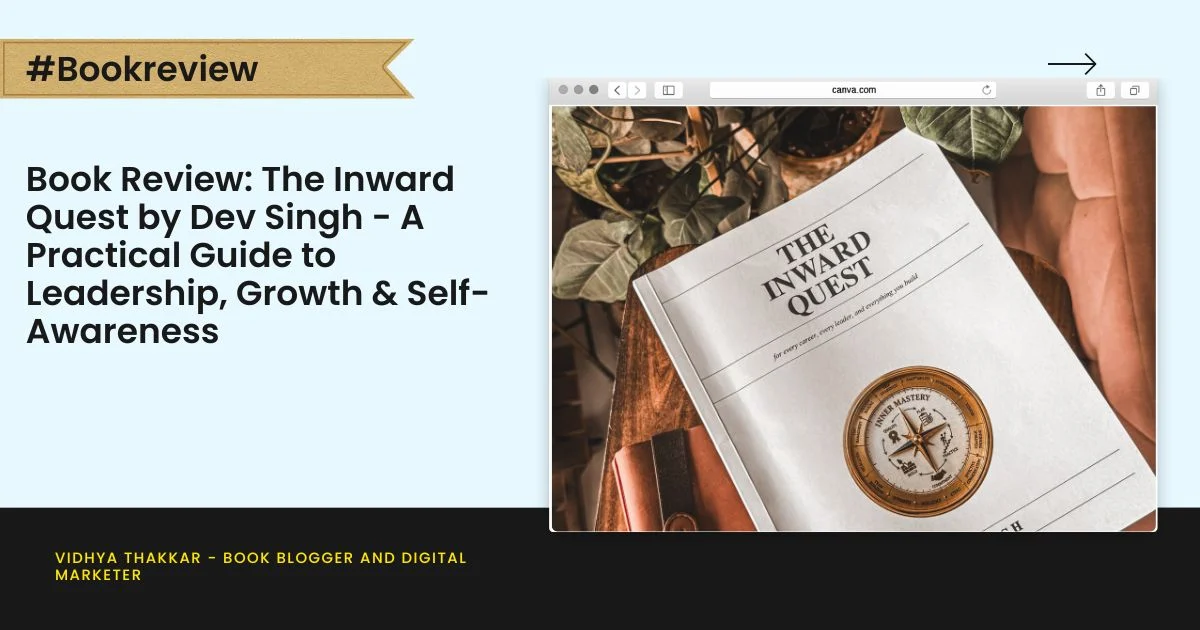
The Inward Quest by Dev Singh is a thoughtful guide to leadership, professional growth, and self-awareness. The book explores how our habits, mindset, decisions, discipline, and relationships shape the way we work and lead. Through practical insights, 50 practitioner examples, stories of institution-builders, and reflective worksheets, Dev Singh encourages readers to look inward, recognise their patterns, and make meaningful changes that can create a lasting impact. A thoughtful and practical read for anyone who wants to understand themselves better, become a better professional or leader, and build something that lasts.
Review:
“Endurance is built on identity, on who you have decided you are and what that person does, regardless of how the current chapter feels.”
I had read Dev Singh’s previous book, so I was particularly excited to pick up The Inward Quest. What drew me to this book was the promise of looking beyond the usual conversations around careers and leadership and understanding the person behind the professional. And the book does exactly that.
The Inward Quest is a guide to professional life that asks us to look inward before looking outward. It explores how our inner and outer disciplines shape the way we work, lead, make decisions, build relationships, and ultimately define who we become in our careers. The book made me think about how the decisions we take define us and how much it really takes to lead a team. What makes someone a good leader? What role do we play within an organisation? And how do our own habits, patterns, and mindset influence the people and culture around us?
One of the things I found particularly interesting was Dev Singh’s take on professional errors. He explains that professional failures aren’t always the result of poor judgement or a lack of skill. Sometimes, the deeper problem is the distance we create between ourselves and our teams. This is where the book’s discussion around leadership and organisational culture becomes particularly relevant. Building a good culture is not simply about policies or processes; it begins with how leaders show up, communicate, make decisions, and build relationships with their teams.
The book looks at the habits we need to identify, the habits we need to build, and the patterns we need to recognise in ourselves to become better professionals and better leaders. Dev Singh talks about the mind we work with, fear, confidence, discipline, self-motivation, mental health, developing a quality mindset, and knowing when to ask for help.
I particularly liked how these ideas are connected to everyday professional life. The book doesn’t treat leadership as something limited to people sitting in senior positions. It encourages us to understand our own role in a company and recognise how our behaviour, choices, and mindset contribute to the larger organisation. There is also a discussion around hiring — how to identify the right talent, what happens when you hire the wrong person, and how one hiring decision can influence an entire team. The sections on team building explore what makes or breaks a team and why building a strong team requires much more than simply putting talented people together.
The book also explores various theories and frameworks around professional behaviour and leadership, while constantly bringing the discussion back to situations we can recognise in our own professional lives. Dev Singh’s writing is simple and to the point, which makes the book relatable and easy to understand. What I particularly loved was that his ideas feel grounded in reality. They are not complicated concepts that remain on the page; they are things we can reflect on and apply to our own professional journeys.
One of my favourite aspects of the book is the way Dev Singh brings these ideas to life through real examples. Through 50 practitioner examples, he brings together the experiences of people who built enduring institutions while working under pressure and navigating difficult circumstances. He gives us glimpses into the lives and work of Ardeshir Godrej, J.R.D. Tata, Jamshedji Tata, Ela Bhatt, and many others, showing how they built, led, and navigated challenges in their professional journeys.
The book also moves beyond conventional ideas of leadership and explores creative fire, navigating friction, stepping out of ego traps, and understanding persona and voice. These sections add another dimension to the inward journey, making us think about how ego, identity, and the way we present ourselves can influence the way we work and lead.
And then come the worksheets, which I honestly enjoyed the most. They encourage you to pause and actually work through the ideas instead of simply reading them and moving on. For me, this was one of the most useful parts of the book because it makes the process of reflection more personal and actionable. What stayed with me most is that enduring professional growth doesn’t necessarily come from making one dramatic change. It can begin with identifying a pattern, changing a habit, questioning a decision, asking for help, or simply becoming more aware of how we show up every day. The Inward Quest reminded me that the way we build things outwardly is deeply connected to the work we are willing to do within ourselves.
In all, The Inward Quest by Dev Singh is a thoughtful guide to leadership, professional growth, and self-awareness. The book explores how our habits, mindset, decisions, discipline, and relationships shape the way we work and lead. Through practical insights, 50 practitioner examples, stories of institution-builders, and reflective worksheets, Dev Singh encourages readers to look inward, recognise their patterns, and make meaningful changes that can create a lasting impact. A thoughtful and practical read for anyone who wants to understand themselves better, become a better professional or leader, and build something that lasts.
Get your Book Reviewed by Vidhya Thakkar – Connect us Now
Frequently Asked Questions (FAQs)
1. What is The Inward Quest by Dev Singh about?
The Inward Quest explores leadership, professional growth, self-awareness, habits, mindset, team building, hiring, workplace culture, and the inner disciplines that shape our careers.
2. Is The Inward Quest only for senior leaders?
No. The book is relevant for working professionals at different stages of their careers, as well as managers, entrepreneurs, and anyone looking to become more effective at work.
3. What makes The Inward Quest different from other leadership books?
The book focuses on the person behind the professional. Along with leadership concepts, it looks at habits, fears, confidence, discipline, ego, mental health, self-motivation, and personal patterns.
4. Does the book include real-life examples?
Yes. Dev Singh shares 50 practitioner examples, including people such as Ardeshir Godrej, J.R.D. Tata, Jamshedji Tata, and Ela Bhatt, among others.
5. Is The Inward Quest a practical book?
Yes. The book combines professional insights and real-world examples with worksheets that encourage readers to pause, reflect, and apply the ideas to their own lives.
6. Who should read The Inward Quest?
It is ideal for leaders, managers, entrepreneurs, working professionals, and anyone interested in personal and professional growth.
Reader_viddh’s Take
What I loved most about The Inward Quest is its practical approach. It doesn’t just tell us how to become better leaders; it makes us look at ourselves — our habits, mindset, decisions, relationships, and patterns and understand how they influence the way we work and lead. The 50 practitioner examples add depth, while the worksheets make the reading experience more interactive. A thoughtful read for anyone who believes that becoming better at what we do begins with understanding ourselves better.
Also Read:
Book Review: Journey to Infinity Within by DevSingh Balan | A Layered Spiritual Exploration
The Chanakya Playbook by Abiraj Gupta