
Day 1 of the Char Dham Yatra began not just with a trek, but with an awakening. Yamunotri—the starting point of the sacred circuit—is known as Bhakti Dham, the seat of devotion. Before we even took our first step, we were reminded that each Dham reflects a deeper essence of spiritual growth: Yamunotri symbolises Bhakti (devotion), Gangotri represents Gyaan (wisdom), Kedarnath stands for Vardaan (blessings), and Badrinath signifies Moksha (liberation).
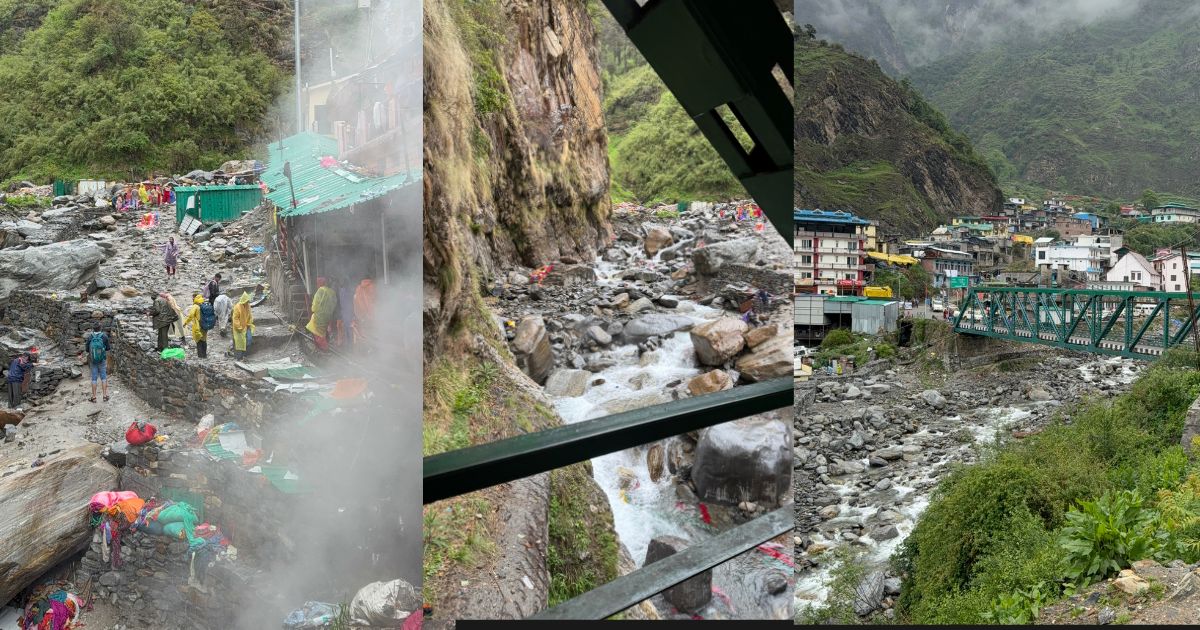
With this knowledge etched in my heart, I began the 5 km uphill trek towards Maa Yamuna, carrying not just my backpack, but also hopes, unspoken prayers, and a heart full of longing. As we climbed, the skies opened up ever so gently, blessing us with a soft drizzle. It felt less like rain and more like Maa Yamuna’s way of saying, “Welcome, my child.” Each droplet carried a kind of warmth, a divine reassurance that we were being watched over. That moment—a mix of awe, fear, and reverence—set the tone. The trek was steep and challenging, yes, but strangely comforting too. There was something sacred in every step.
The trail was rough, sometimes overwhelming—narrow, slippery, lined with horses, palkhis, and weary pilgrims like me. But within that chaos was a quiet harmony. Strangers became companions. Along the way, I smiled at strangers, and in return, I saw eyes filled with devotion and contentment after their darshan. Smiles were exchanged wordlessly. The trail buzzed with tiny acts of kindness, small talks, and one common thread—unwavering love for Maa Yamuna. Small gestures of help—someone offering a hand, someone sharing water—felt like echoes of devotion in action.
There was something sacred in those little moments. A child chanting “Jai Maa Yamuna” with full force. An elderly couple walking hand-in-hand, supporting each other literally and spiritually. And beside us, roaring in her fierce beauty, was the Yamuna. Her sound was not just water flowing—it was healing, Soothing. As if she was reminding us that we’re not alone.
Her rhythm matched the beat of my heart. Her sound was not noise—it was naad, the cosmic vibration. Fierce, free-flowing, unapologetically alive. And with every turn, I felt closer to her. Closer to myself. Closer to Kanha. I played her bhajans on my phone as we neared the temple, letting her name echo through the valley, and something in me shifted. It wasn’t just a trek. It was a moving meditation. A collective prayer. A symphony of footsteps and faith. Despite the narrow path filled with horses, humans, and palkhis, there was an unspoken harmony. People helped one another, laughed together, chanted her name, and walked as one big family, bound by faith.
Then, in a split second, I witnessed a minor accident on the trail. My breath caught. Time slowed. But everyone rushed to help, showing how faith also teaches humanity. That moment hit me hard—it reminded me of the fragility of life. I felt shaken, yes—but also treasured. Chosen. Held. It reminded me how protected we truly are, how each breath is a blessing. That moment humbled me. And made me more aware of the divine energy surrounding us. It made me grateful for every step I could take, every breath I could draw.
When I reached the top and the temple came into view, my heart swelled. The moment I saw Maa Yamuna, standing strong amidst the wild mountains and cascading waters, I had tears in my eyes. She wasn’t just a river. She was presence, energy, and grace.
And then I saw Surya Kund—the sacred hot spring. On one side, piping hot water bubbling from the earth. On the other hand, the icy chill flow of the Yamuna’s stream. Opposites, yet inseparable. Just like us, full of contradictions, yet divine at our core. Together, they tell the story of Suryaputri—the daughter of the sun, Maa Yamuna. How she carries within her both warmth and chill, fire and calm. A divine balance, in that contrast.
The contrast is mind-blowing. How can water this hot and this cold exist side by side? But in that paradox lies the story of Yamunotri.
Maa Yamuna, also known as Suryaputri (daughter of Surya, the Sun God), is believed to have descended to Earth to purify and uplift humanity. She is the sister of Yama, the God of Death. While Yama represents justice and discipline, Yamuna embodies love, forgiveness, and compassion. It is said that a dip in the Yamuna washes away not just sins, but fear—even the fear of death itself. Such is the grace of the divine sister.
According to legend, Sage Asit Muni lived in the region near Yamunotri. Even in old age, he never missed his daily bath in both the Ganga and Yamuna rivers. But when he could no longer travel to Gangotri, the Ganga is believed to have appeared near Yamunotri to bless the devoted sage.
The Surya Kund is a natural hot spring that flows near the temple, believed to be gifted by Surya Dev himself—an eternal reminder of the fire and light that runs in Yamuna’s veins. Devotees boil rice and potatoes in the kund to offer as prasad to the goddess—a simple yet profound gesture of surrender and gratitude.
On one side: the coldest waters of the glacier-fed Yamuna. On the other hand, the scalding heat of Surya Kund. Together, they tell the story of balance. Of fierceness and warmth. Of divine contradictions.
And then came the moment I’ll never forget—the darshan. I stood before her, took her blessings, and felt something shift inside. I don’t remember the exact words I prayed. But I remember the feeling. The release. A strange, indescribable lightness. It was as if she saw every part of me-every flaw, every worry—and still embraced me. Not for who I was pretending to be, but for who I truly was. It was as if she pulled all the weight off my shoulders without a sound. As if she saw every wound I had been hiding, and healed it with one glance.
When I touched her waters—her achman—it was freezing cold, but I felt a stillness in my soul. Somehow, in that moment, I felt as if she gently pulled away all my worries and whispered, “You’re safe now.” It was cold, yes. But it made me feel alive. I felt more alive than I had in months. Refreshed. Reinvigorated. Reborn.
Coming down the mountain felt lighter, not because the path had changed, but because I had. I had left something behind with Maa—my fears, my burdens, my need to control everything. And in return, I carried her Bhakti in my heart. This was not just a trek. This was not just day one. This was the beginning of surrender. And in return, I was blessed.