
This post contains Amazon affiliate links. If you buy through one, I earn a small commission at no extra cost to you. It never changes what I write about a book.
Author: Mayank Kashyap
Publisher: Leadstart Publishers
Summary
Odyssey of Daze is an engaging and emotional read filled with drama, hope, friendship, romance, and powerful life lessons. If you enjoy stories about trauma, healing, sibling bonds, redemption, and the impact of both good and bad choices, this is definitely a book worth picking up.
Review
“Remember, the person who never compromises with their dignity and integrity is the one who can look at the mirror free of guilt and shame.”
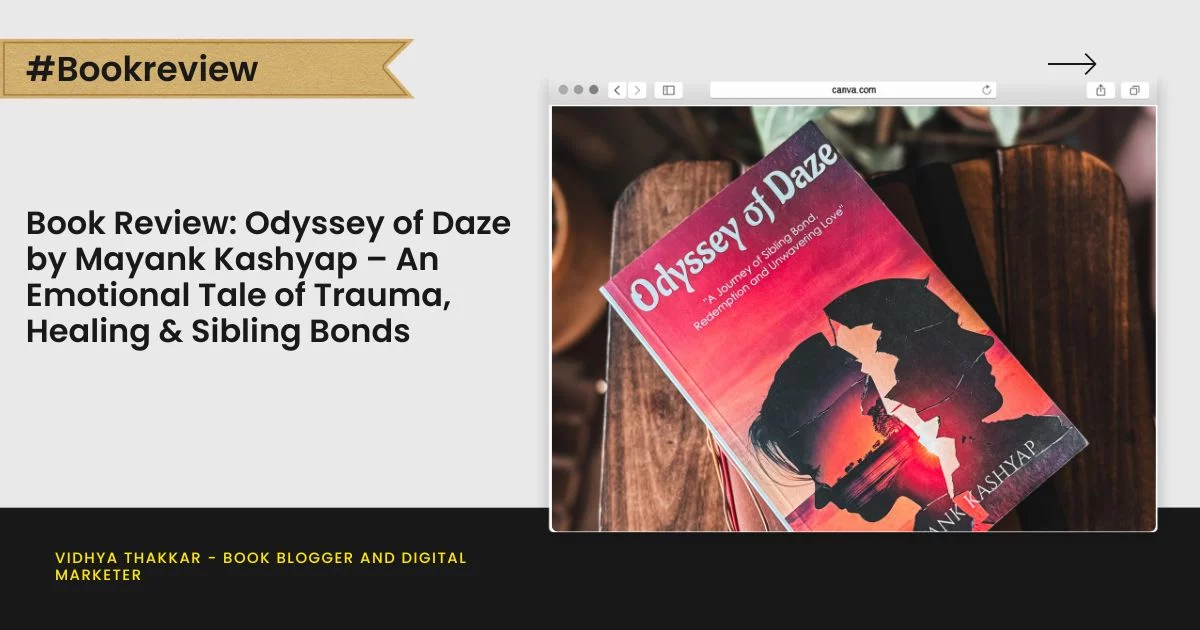
Certain books make us realize how unpredictable life truly is and how one decision can completely alter the course of everything. Odyssey of Daze by Mayank Kashyap is one such book that kept me awake till 4 a.m. because I simply could not stop reading without knowing what would happen next. I initially picked up this book thinking it would mainly revolve around sibling bonds and family relationships, but it slowly unfolded into something far more intense, emotional, layered, and thought-provoking than I expected. What begins as a coming-of-age story gradually transforms into a deeply emotional journey of trauma, healing, self-destruction, redemption, and self-discovery.
The story follows Rishi and Nitika, two siblings who lose their parents at a young age and later their grandmother, the only emotional support they truly had. Left alone in the world, they move from Patna to Pune with hopes of building a better future. However, the move changes their lives in unimaginable ways. What follows is a painful yet deeply compelling journey of love, trauma, addiction, self-destruction, healing, and redemption. At its core, the story is not just about tragedy or suffering, but about how people slowly learn to reclaim themselves after life completely falls apart. It beautifully explores how easily people can lose themselves when they lack emotional support and guidance at the right time.
The plot unfolds through the college lives of Rishi and Nitika – their friendships, fun moments, dreams, relationships, and struggles. While Rishi falls in love with Sakshi, he also falls into the wrong company of Kunal, which gradually leads him toward trouble. Nitika, on the other hand, struggles emotionally and eventually gets trapped in a dangerous world of addiction because the one person she needed most- her brother was not there for her when she needed guidance. What makes the plot impactful is the way Mayank realistically portrays emotional loneliness and vulnerability. He subtly highlights how young people, when emotionally isolated or grieving, can slowly drift toward destructive choices while searching for acceptance, comfort, or escape. The downfall of both Rishi and Nitika never feels exaggerated; instead, it feels painfully real and believable. Their inability to communicate with each other becomes one of the biggest emotional tragedies of the story.
The first few chapters take time to build the world and characters, but once the story gains momentum, it becomes incredibly immersive. Personally, I enjoyed the second half of the novel even more, especially when the siblings return home and their individual journeys toward healing begin. Rishi’s stay in the village and the lessons he learns there become one of the strongest aspects of the book. The narrative shifts beautifully from emotional destruction to emotional growth, and through his experiences in the village, Rishi slowly begins understanding responsibility, purpose, forgiveness, and the value of human connection. That transformation is one of the most meaningful aspects of the story. While the beginning feels slightly slow and detailed at times, the story eventually gains momentum and keeps you completely invested.
One of the best parts of the story is the way the author balances intensity with relatability. The writing style is crisp, descriptive, and emotionally engaging without becoming overly heavy. Mayank captures emotions beautifully- whether it is grief, guilt, longing, regret, or hope. The narrative also balances emotionally intense moments with lighter scenes of friendship, romance, and sibling banter, preventing the story from becoming overwhelmingly dark despite dealing with heavy themes like trauma and addiction.
The character development is another strong point. Rishi’s character arc stands out the most. We see him as a protective brother, a loving partner, a flawed young man influenced by bad company, and eventually someone who understands responsibility, purpose, and life itself. His journey is painful at times, but it also carries hope and growth. Nitika too is a wonderfully written character. Watching her slowly reclaim her life and take charge of herself makes you genuinely proud of her. Apart from them, supporting characters like Irfan, Sakshi, Sankalp, and Mishra Uncle add warmth and emotional depth to the story. Mishra Uncle, especially, becomes a pillar of support for the siblings and plays a significant role in guiding them toward the right path.
The story also highlights the importance of family, meaningful relationships, emotional support systems, and community. Through Rishi’s experiences in the village, the story explores how helping others and working toward change can transform a person from within. Another aspect that stands out is how it shows that healing is never linear. The characters struggle, fail, regret their decisions, and hurt both themselves and others before finally learning how to forgive themselves and move forward. That emotional realism makes the story feel authentic and relatable.
Despite dealing with heavy themes like addiction, trauma, and emotional loss, the book never feels overwhelmingly dark. There are lighter moments, friendships, romantic relationships, and heartwarming scenes that balance the emotional weight of the story beautifully. The sibling bond remains the emotional core of the story throughout. No matter how much Rishi and Nitika struggle or drift apart, they continue to stand by each other in the end.
Another aspect that truly stood out for me was the way Mayank Kashyap focused on the smaller emotional details throughout the story. Whether it was Sankalp silently understanding Nitika’s emotions, Nitika knowing exactly how her brother is and still never giving up on him, or Rishi trying his best not to hurt Nitika despite his rigid and overprotective nature, these moments felt incredibly real and relatable. The author beautifully captures that typical elder brother behavior where love often comes wrapped in strictness, silence, and protectiveness rather than words.
I especially admired Rishi’s emotional journey in the latter half of the story. The way he reflects on his pain, the mistakes he made, and how he slowly learns to pull himself out of that darkness adds tremendous emotional depth to his character. Even the smaller interactions- his conversations with the village people, his bond with the teacher, and the connection he develops with the village boy Shivam add warmth and authenticity to the narrative. These seemingly small moments are what make the story emotionally impactful because they quietly show how human connections can slowly heal a broken person.
The climax of the book feels cinematic and emotionally satisfying, with the scattered pieces finally coming together in a meaningful way. The final chapters carry both emotional intensity and hope, making the ending feel rewarding after everything the characters endure. The last few chapters, especially, leave a lasting impact.
In all, Odyssey of Daze is an engaging and emotional read filled with drama, hope, friendship, romance, and powerful life lessons. If you enjoy stories about trauma, healing, sibling bonds, redemption, and the impact of both good and bad choices, this is definitely a book worth picking up.
Get your Book Reviewed by Vidhya Thakkar – Connect us Now