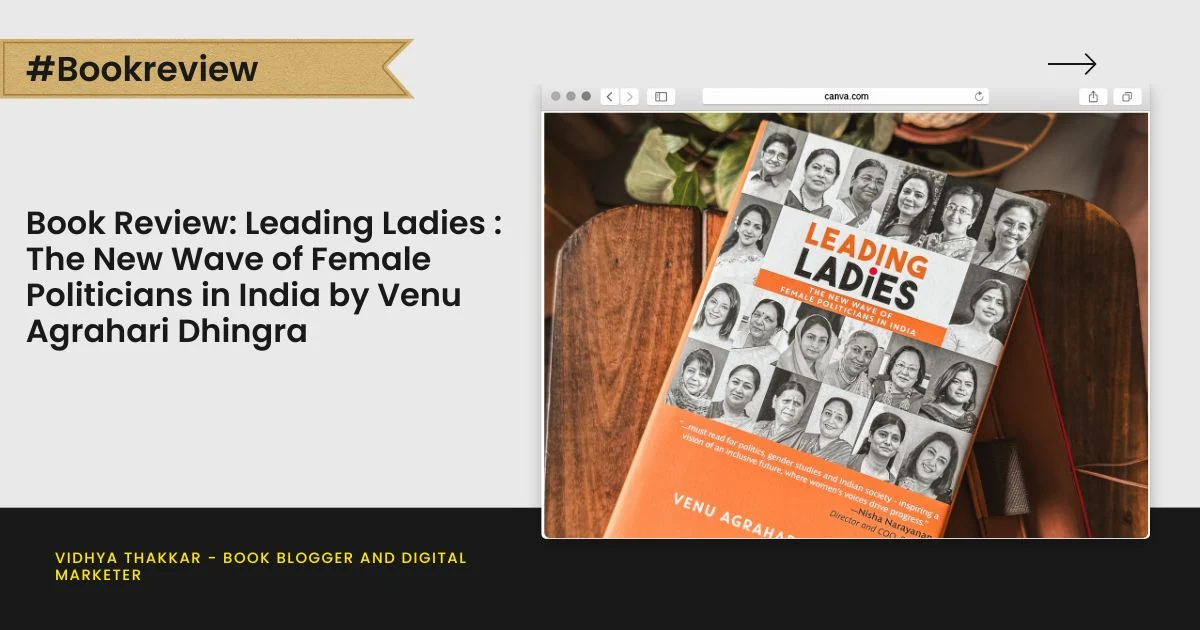
Author: Venu Agrahari Dhingra
Publisher: Atlantic Publishers
Genre: Non-Fiction, Politics, Inspirational, Women in Leadership, Indian Politics
Pages: 213 pages
Ideal for: Readers interested in Indian politics, governance and public policy, for inspiring real-life stories
Summary
Leading Ladies of India is an engaging and inspiring read for anyone interested in Indian politics, women in leadership, governance, or contemporary Indian society. Even if you do not actively follow politics, the book offers an accessible introduction to twenty remarkable women whose stories reveal the many paths to public service and leadership in India.
Review:
“Never give up your rights just because you are a woman and now married.”
Some books introduce us to people we know by name but not by their stories. Leading Ladies of India by Venu Agrahari Dhingra is one such insightful read that brings together the journeys of 20 influential women politicians who have contributed to public life and governance in modern India. While I was familiar with many of these leaders, I knew very little about what inspired them to enter politics, the challenges they faced, or the work they carried out beyond the headlines. That is what makes this book special – it goes beyond public image to reveal the people behind the positions.
One of the aspects I appreciated most is the diversity of the women featured. They do not come from similar backgrounds. The book introduces homemakers, bankers, policymakers, actors, activists, and political heirs, each with a unique journey into public life. Some inherited political legacies, while others built their careers through sheer determination and years of service. Together, their stories show that there is no single path to leadership. What also stands out is that this is not a book about political ideologies or party affiliations. Instead, it focuses on the women themselves – their choices, the challenges they overcame, the responsibilities they shouldered, and the work they undertook for society. Bringing together leaders from different political parties, regions, and generations, the book offers a broader perspective on women’s participation in Indian politics and the impact they have made through their initiatives and public service.
As I read through the twenty profiles, another picture of India began to emerge. Beyond elections and political debates are women who worked on issues that directly affect people’s lives – from education and public welfare to food security, women’s empowerment, and social development. The book brings these contributions into focus, helping readers appreciate the work that often remains overshadowed by political headlines. Among the many stories, I particularly enjoyed reading about Rabri Devi, Anandiben Patel, Mehbooba Mufti, Meenakshi Lekhi, and Supriya Sule. Each of them entered public life under very different circumstances, and learning about the decisions, challenges, and responsibilities that shaped their careers gave me a much deeper appreciation for their contributions.
Venu Agrahari Dhingra adopts a simple, documentary-style approach that works remarkably well for this subject. Her writing is crisp, accessible, and informative. Every chapter is concise enough to keep readers engaged while providing meaningful insights into each leader’s life. I especially appreciated that the author remains objective throughout, allowing the journeys to speak for themselves rather than turning the book into political commentary. The inclusion of photographs, timelines, and references further enriches the reading experience, helping readers connect with each leader and better understand their place in contemporary Indian politics.
If I had one small observation, it would be that a few of the stories left me wanting more. The concise format keeps the book engaging, but some journeys are so compelling that I wished the author had explored a few defining moments in greater depth. Additional personal anecdotes or behind-the-scenes experiences would have made those chapters even more immersive. One realization stayed with me throughout the book: we often recognize politicians through speeches, election campaigns, or media headlines, but rarely pause to understand the years of perseverance and personal choices that shaped their journeys. Leading Ladies of India bridges that gap beautifully by presenting the stories behind the public image. We often remember leaders by the positions they held, but this book reminds us to look at the paths they walked to get there.
Overall, Leading Ladies of India is an engaging and inspiring read for anyone interested in Indian politics, women in leadership, governance, or contemporary Indian society. Even if you do not actively follow politics, the book offers an accessible introduction to twenty remarkable women whose stories reveal the many paths to public service and leadership in India.
Get your Book Reviewed by Vidhya Thakkar – Connect us Now
Frequently Asked Questions (FAQs)
What is Leading Ladies of India by Venu Agrahari Dhingra about?
Leading Ladies of India is a nonfiction book that profiles 20 influential women politicians from diverse backgrounds. It explores their personal journeys, leadership, challenges, and contributions to public life in India.
Who should read Leading Ladies of India?
The book is ideal for readers interested in Indian politics, women in leadership, governance, biographies, and inspiring real-life stories. It is also a useful read for students of political science and civil services aspirants.
Does the book focus on political ideologies?
No. Rather than discussing political ideologies or party affiliations, the book focuses on the personal journeys, struggles, achievements, and public service of the women featured.
Which women leaders are featured in the book?
The book includes profiles of several prominent leaders, including Anandiben Patel, Droupadi Murmu, Hema Malini, Dr. Kiran Bedi, Rabri Devi, Mehbooba Mufti, Meenakshi Lekhi, Supriya Sule, Priya Dutt, Anupriya Patel, Dimple Yadav, and others.
What makes Leading Ladies of India different from other political books?
Instead of analyzing elections or political debates, the book highlights the human stories behind India’s women leaders, offering readers a glimpse into their backgrounds, challenges, and contributions to society.
Is Leading Ladies of India suitable for readers who do not follow politics?
Yes. The author’s simple and documentary-style writing makes the book accessible even for readers who are not regular followers of Indian politics.
How is the writing style of Venu Agrahari Dhingra?
The writing is crisp, informative, and easy to follow. Each chapter is concise while providing meaningful insights into the life and work of each leader, supported by photographs, timelines, and references.
What is the main takeaway from Leading Ladies of India?
The book reminds readers that behind every well-known political figure is a story of perseverance, responsibility, and public service. It offers a deeper appreciation of the women who have contributed to India’s governance and social development.
Reader_viddh’s Take:
We often know politicians by the offices they hold or the headlines they make, but rarely by the journeys that brought them there. Leading Ladies of India shifts the focus from politics to people, reminding us that behind every public figure is a story of perseverance, purpose, and service. It’s a thoughtful introduction to the women who have quietly helped shape modern India.