This post contains Amazon affiliate links. If you buy through one, I earn a small commission at no extra cost to you. It never changes what I write about a book.
Author: Ishu Bhalla
Genre: Non-Fiction | Business Memoir | Leadership | Sales & Management | Personal & Professional Growth
Pages: 89 Pages
Ideal for: Sales Professionals | Corporate Professionals | Aspiring Leaders | Management Students | Entrepreneurs | Readers Interested in Workplace Culture & Career Growth
Summary
The Human Organization: From the Pen of a Salesman is a short, inspiring and insightful read that offers a glimpse into the life of a salesperson and the human side of an organization. Having admired Hindustan Unilever for years, this book gave me another reason to appreciate it: the people, relationships and values behind its success.
Review:
“Your values matter most when you have choices.”
I have always admired Hindustan Unilever as an organization, but reading about its culture, people and values through the lens of a salesman gave me an entirely different perspective. It deepened my respect for the organization and helped me understand the people and experiences that have contributed to its success.
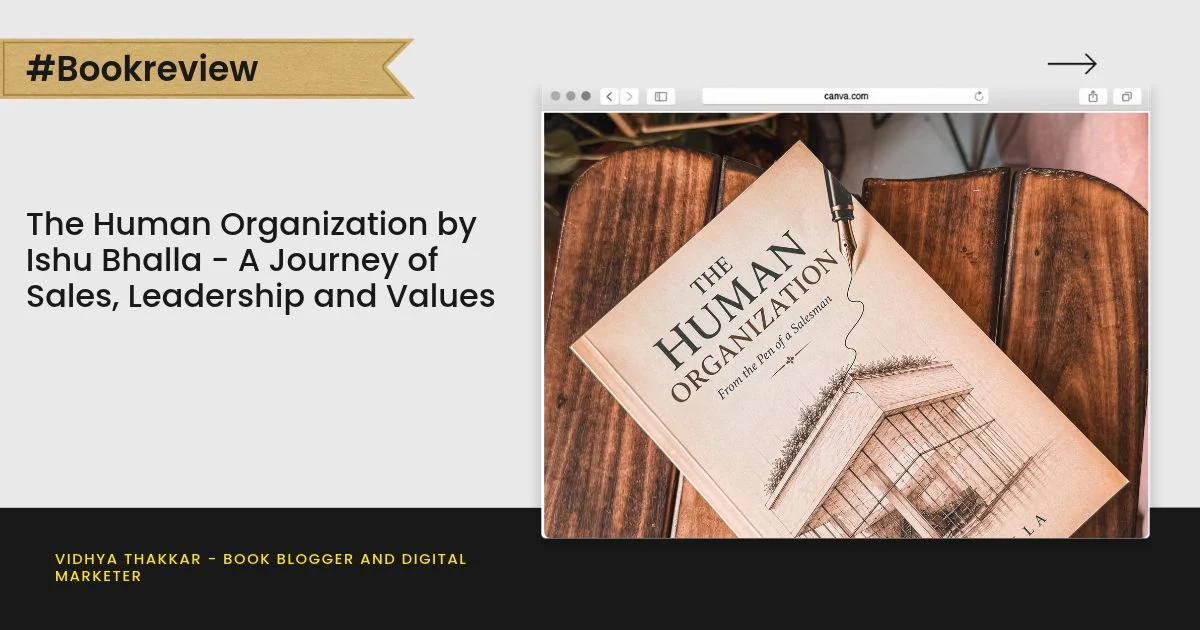
The Human Organization: From the Pen of a Salesman by Ishu Bhalla is a short, insightful and inspiring account of the author’s professional journey, beginning with his early days as a salesman at Hindustan Lever (now Hindustan Unilever). Through his experiences, challenges and personal growth, he shares valuable lessons about sales, leadership, resilience, workplace culture and the importance of staying true to one’s values.
The journey begins in 1980, when a young Ishu Bhalla, just 22 years old, was determined to begin his career with Hindustan Lever. One of the interesting incidents from his early journey involves arriving for his interview covered in coal tar after a road mishap. Despite the circumstances, he remained determined to pursue the opportunity. It marked the beginning of a seventeen-year association that would shape his professional career and outlook towards life. The book takes us back to a time when sales involved extensive travelling, visiting markets, building relationships with distributors and understanding the challenges of different regions. From crowded bus journeys and carrying heavy bags of calculators to navigating unfamiliar markets, his experiences offer a glimpse into the demanding life of a salesperson during the 1980s and 1990s.
What I particularly appreciated was how the book brings attention to the sales force, one of the most important pillars of any organization. We often associate a company’s success with its products, marketing strategies or leadership, but rarely acknowledge the people working on the ground, ensuring that those products reach consumers. Through his experiences, Ishu helps us understand the responsibilities, challenges and contributions of a salesperson.
As the narrative progresses, we follow his professional growth from a frontline salesman to a sales officer and eventually to positions involving greater responsibilities, leadership and team management. From Dehradun and Lucknow to Haryana, Bareilly and Delhi, every new location brings different challenges and opportunities. Whether it is dealing with distributors, understanding regional markets, managing difficult situations or training new employees, each experience contributes to his professional and personal growth.
Another aspect that stood out to me was the role of mentors, seniors and colleagues in shaping his journey. Throughout the book, Ishu acknowledges the people who guided him, encouraged him and helped him navigate difficult situations. His experiences offer an interesting perspective on Hindustan Lever’s organizational culture, where professional relationships often extended beyond designated roles and responsibilities.
What makes this book different from a conventional management book is its focus on how an organization shapes an individual. It is not merely about achieving sales targets or climbing the corporate ladder but also about the values, discipline and relationships that stay with a person long after they have moved on. The book also highlights the importance of building a healthy work environment where employees feel supported, valued and encouraged to grow. I particularly appreciated the emphasis on how managers are responsible not only for achieving targets but also for understanding, guiding and developing their teams. After all, leadership is as much about helping others grow as it is about achieving results.
One of my favourite lessons from the book is:
“Separate your emotions from your execution.”
I found this particularly meaningful because it reflects the importance of maintaining professionalism and clarity, especially when circumstances become challenging. Resilience is not simply about overcoming difficulties but also about remaining consistent, upholding one’s values and continuing to give one’s best, even when things do not go as planned.
What makes the book interesting is that Ishu does not limit his journey to professional achievements. He also reflects on the decisions, uncertainties and challenges that shaped him, including recognizing when it was time to move on from the organization. This adds another dimension to the narrative, reminding us that professional growth is not always about staying or moving ahead but also about knowing when to embrace change.
The structure of the book is simple and effective. Each chapter revolves around an experience or situation from the author’s professional life and concludes with a Bottom Line, where he summarizes the lesson or takeaway. I particularly liked this approach because it makes the book easy to follow while encouraging readers to reflect on how these lessons apply to their own professional journeys.
Coming to the writing style, Ishu keeps the language simple and easy to understand. However, I felt that the narrative occasionally came across as too structured and polished, which took away some of the natural flow of storytelling. Considering that the book draws from his personal experiences, I would have appreciated a more spontaneous and conversational approach in certain sections. Nevertheless, the experiences and lessons he shares remain relevant and insightful.
While the book primarily focuses on his experiences at Hindustan Lever, many of its lessons extend beyond sales. Whether it is understanding people, adapting to change, building relationships or making difficult career decisions, there is something to take away from his journey. What stayed with me most was the idea that an organization’s true impact is not limited to the careers it builds but also lies in the values it instils in its people. And perhaps that is what makes Ishu’s journey worth reading. It is not just the story of a salesman growing within an organization but also of an organization shaping the person he becomes.
Overall, The Human Organization: From the Pen of a Salesman is a short, inspiring and insightful read that offers a glimpse into the life of a salesperson and the human side of an organization. Having admired Hindustan Unilever for years, this book gave me another reason to appreciate it: the people, relationships and values behind its success. If you are someone working in sales, beginning your corporate journey or interested in understanding how people and workplace culture shape an organization, this book is worth picking up.
Get your Book Reviewed by Vidhya Thakkar – Connect us Now
Frequently Asked Questions (FAQs)
1. What is The Human Organization: From the Pen of a Salesman by Ishu Bhalla about?
The book chronicles Ishu Bhalla’s professional journey at Hindustan Lever (now Hindustan Unilever), highlighting his experiences in sales, career growth, leadership, mentorship and the organizational values that shaped him.
2. Is The Human Organization based on a true story?
Yes, the book is based on Ishu Bhalla’s real-life professional experiences, reflecting on his seventeen-year journey with Hindustan Lever and the lessons he learned along the way.
3. What are the key lessons from The Human Organization?
The book explores resilience, adaptability, teamwork, mentorship, leadership and the importance of maintaining personal values while navigating professional challenges.
4. Is The Human Organization suitable for someone who is not working in sales?
Absolutely! While the book focuses on the author’s experiences as a salesperson, its lessons about workplace culture, professional relationships, decision-making and personal growth are relevant across industries.
5. What makes The Human Organization different from other business and leadership books?
Rather than presenting management theories or sales strategies, the book shares practical lessons through the author’s personal experiences. Each chapter concludes with a Bottom Line, making the takeaways easy to understand and reflect upon.
Reader_Viddh’s Take
The Human Organization: From the Pen of a Salesman by Ishu Bhalla is a short, insightful and inspiring read that offers an interesting perspective on the human side of corporate life. I particularly appreciated how the author highlights the importance of sales professionals, mentorship, workplace culture and the values that shape an individual’s career. While the writing occasionally felt too structured and could have been more conversational, the experiences and lessons make it a worthwhile read. A book that reminds us that organizations don’t just build careers; they also shape people.
Also Read:
Accumulate- What Really Builds Your Career by Anu Bulusu
Book Review: Purpose Has a Pattern by Anu Bulusu – A Thoughtful Take on Passion & Purpose
Book Review: The Chanakya Playbook by Abhiraj Gupta – Where Ancient Wisdom Meets Modern Leadership