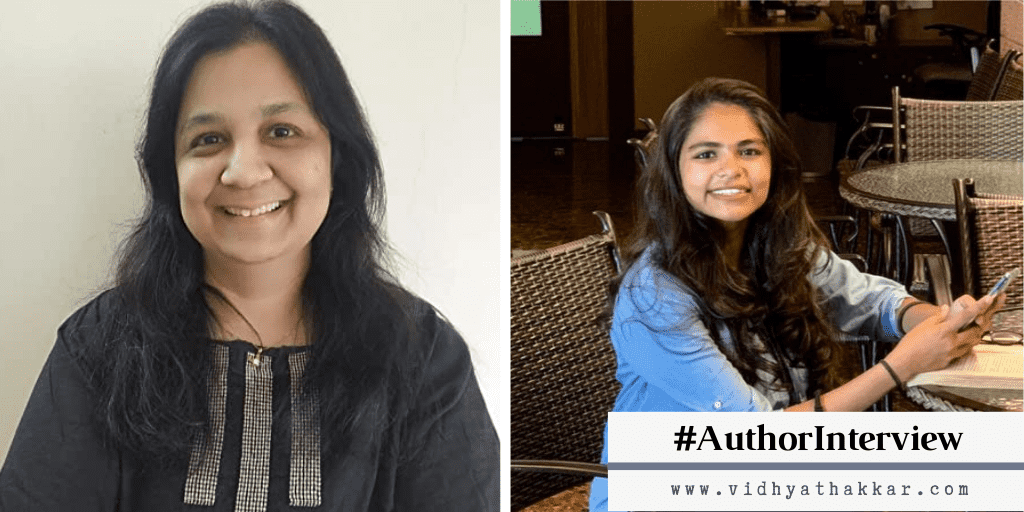

About The Author
Deblina Bhattacharyya is a student of English Literature by day, a passionate writer by night, and a professional dreamer by nature. Born and bred in the city of Joy, she self-published her debut collection of poetry, Knots, in 2019, followed by
her second poetry book, My Black Rose, in 2021 (published by Mithaas Services). This is her debut work of fiction, where she weaves a tale of complicated family relationships and how destiny always ensures we get what we deserve. Apart from
being a writer and an avid reader, she is also a book critic and a teacher of English. She can be contacted through Instagram (author_deblina)
Read the review here: Book Review: This Thing Called Love by Deblina Bhattacharyya is a heartfelt read.
Interview
Q) What inspired you to write This Thing Called Love? Was there a moment or idea that sparked the story?
The idea for This Thing Called Love came to me all the way back in 2017, while I was immersed in reading a book where the protagonist was a writer and had received a job offer in Paris. It struck me how incredibly dreamy it was to be a writer living in the City of Lights, Love, and Dreams. I did not have a concrete idea back then on what the rest of the framework would be, but I quickly jotted it down in my Notes app, where I keep all my ideas for future books. “Write a book about an author living in Paris.” That one sentence took shape into what it is today over the course of the years.
Q) The story explores a slow-burn romance within an arranged marriage. What drew you to that dynamic?
I am a strict follower of the advice, “Write what you would love to read,” and I can confess, the arranged marriage trope is my favourite while reading romance. There is something about the unexpected nature of love blooming after marriage that just pulls me in. However, I realised, most arranged marriage romances were insta-love, or at least, insta-lust. I had never read a book where the romance after marriage was slow, hesitant, taking its time to blossom through quiet exchanges. I had identified a gap in the market, and I knew that my debut novel just had to be me exploring that gap.
Q) The emotional buildup between the characters feels very organic. How did you strike that balance between restraint and connection?
Something that really helped me strike that balance and keep the development of the relationship organic, was talking to myself in the characters’ voices. Before writing any scene, I always like to rehearse it, placing myself in the characters’ shoes. For example, what would I say if I were Deven and I were in this situation? And then I say that out loud, as if I’m actually Deven, speaking to Amaira or someone else. Yes, sometimes that earned me some funny looks from my family members because I seemed to be talking to myself, but this exercise helps me in drafting a scene easily, and more spontaneously.
Q) Did you always know how the story would end, or did it evolve as you wrote?
When I first started penning down the rudimentary idea that I had all the way back in 2017, I had a different vision for the story itself. Naturally, the ending I had envisioned was also a bit different. But, as I got into the actual process of writing and revising, many layers evolved in due course, and by the time I had typed the last word, I knew that the ending I had in mind earlier would have never worked out. It felt very natural to end it the way it is now.
Q) Many readers feel deeply connected to Deven’s character—what was your process in shaping his emotional world?
They say, a writer buries pieces of himself/herself in every character they write, sometimes unwittingly. Deven is a character very close to my heart, because arguably, he contains many qualities that I myself have. It was not like I went into the story with a firm decision that he would be what he is, but as I started crafting his character, I realised that I wanted to make him different from the typical romance heroes, and somewhat subconsciously, I began infusing him with the traits I possess. Although, I think he is a composite of many different people I have come across, myself included.
Q) Amaira’s complexity evokes a range of emotions in readers. What was the most challenging part of writing her character?
Writing Amaira was very experimental, whereas Deven’s character came to me quite naturally. To be honest, keeping her character realistic yet likable was a big challenge. Originally, I had written her to be way more assertive, and as a result, had ended up making her less endearing to the readers. While revising, I had to tone her down a bit, soften her around the edges while keeping her essence the same. Striking a balance between her fire and her calm was undoubtedly something I had to spend a lot of time on.
Q) Were any of the characters inspired by real people or personal experiences?
Most of the characters in the book are somewhat inspired by real people and personal experiences, though I have fictionalised certain parts of them too. I draw heavily on my own life to create characters and stories, because it helps me keep it raw and real.
Q) Do you follow a structured writing routine, or are you more intuitive when it comes to storytelling?
I am a mix of both spontaneity and structure. I am a very moody writer, often found waiting for the proverbial muse to come to me, but once I get into the zone, I give myself deadlines and routines to get the job done, otherwise, I would procrastinate forever.
Q) How long did it take you to write this novel, from concept to completion? Did you face any creative blocks while writing this story? How did you overcome them?
As mentioned before, the idea came to me all the way in 2017, but I did not revisit that one-sentence idea until 2022-23, when I began writing the story down. After penning down almost 50-55% of the first draft, I faced a major creative block due to certain shifts in my personal life. I had to step away from writing the book for a while, but I never stopped thinking about it. All the while, I kept writing other things like poems, flash fiction, etc. Finally, around September 2023, I decided to finish the rest of the draft within three weeks. Working under that self-imposed deadline helped me reach the finish line. I truly believe the time I took away from writing the novel was crucial as it reinvigorated me, as well as gave me another perspective on the whole storyline. The fact that I stepped away from writing this particular book, but never gave up on writing itself, is also something to take note of. Had I stopped writing completely, I would have had a difficult time bouncing back.
Q) The diary entries play a powerful role in expressing unspoken feelings. What inspired that narrative element?
Originally, I had not incorporated many diary entries in the first draft. Somewhere in my mind, I had Anne Frank’s diary, which still remains a favourite of mine, and that is what inspired me to include this narrative technique in my book as well, but I had not really done much justice to it in the first version. Later on, during the revision phase, I started reading other romances which coincidentally, also had this narrative element, and I realised, it could be a powerful form of expression if I worked on developing it more consistently.
Q) What do you hope readers take away from Amaira and Deven’s journey?
That love and happiness won’t find you when you need or want it, but only when it’s meant to, and that everything happens for a reason. I hope everyone who has read the book tries to discern the silver linings to the dark clouds in their lives, whenever they are faced with difficulties or hardships.
Q) Can you give us any hints about what’s coming in the next part of the story?
Things will get a lot more dramatic, for sure, but it will be even better than this one. That’s all I’m allowed to divulge, haha. XD
Q) Do you plan to explore other genres in the future, or is romance your forever space?
I have already dabbled in a genre distinct from romance before This Thing Called Love – two poetry collections that precede this novel. I’m also open to exploring fantasy, and I do plan to continue writing more poetry. However, one thing I can say with certainty is that whatever I write in the future, love will always be a part of it, because it is one of the fundamental emotions of human life. Be it poems or prose, fantasy or horror, love will sneak into my works inevitably, because honestly, what are we without it?
Get your Book Reviewed by Vidhya Thakkar – Connect us Now