This post contains Amazon affiliate links. If you buy through one, I earn a small commission at no extra cost to you. It never changes what I write about a book.
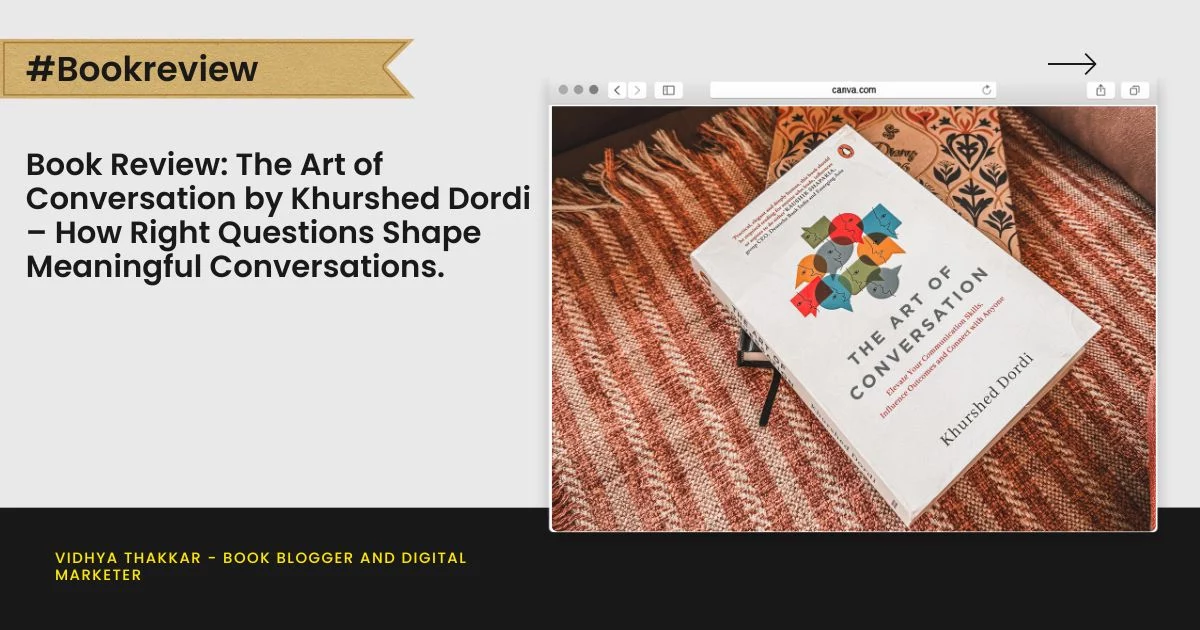
Author: Khurshed Dordi
Publisher: Penguin India
Summary
The Art of Conversation is a book that gently builds your confidence to communicate with anyone and reminds you that meaningful conversations begin not with having the right answers, but with asking the right questions and being present enough to truly listen to the responses. It feels like a book you can return to, not necessarily to read cover to cover again, but to revisit when you need a reminder or reset.
Review
“Questions are the threads that weave connections between individuals. Questions have the power to bridge the gaps between us by seeking to understand rather than to judge. We open the door to dialogue and collaboration. Questions invite us to step outside our echo chambers and engage with those who hold different beliefs and values. In a way, questions become a force for unity and reconciliation.”
While listening is essential, asking the right questions is an art in itself. Thoughtful questions don’t just sustain conversations, they deepen them. They offer fresh perspectives and encourage people to open up and share more of who they are. This is exactly what The Art of Conversation by Khurshed Dordi explores with clarity and depth. It is a practical and insightful guide to elevating communication skills and learning how to connect meaningfully with anyone.
The book delves into the art of questioning, why it matters, how it shapes meaningful conversations, and how to do it effectively. From framing questions thoughtfully to being mindful of tone and focus, the author walks readers through each aspect with clarity and intention. What makes the learning especially accessible is his use of simple, relatable examples that turn complex ideas into easy, everyday practices.
He also highlights the importance of follow-up questions, how to ask for clarification or elaboration without disrupting the natural flow of conversation, and what to keep in mind while doing so. This section stands out because it addresses a common gap in communication: knowing when to pause, when to probe deeper, and when to simply let the other person speak. The emphasis is not on interrogating, but on showing genuine interest.
One aspect I particularly appreciated was his focus on non-verbal cues. These subtle signals often reveal far more than words, and learning to notice them can significantly deepen our understanding of the person we’re communicating with. Body language, pauses, expressions, and shifts in tone quietly shape how conversations unfold, and learning to notice them can significantly deepen our understanding of the person we’re communicating with. The book gently reminds us that communication is not just about exchanging information, but about reading presence and emotional context.
Beyond questioning, the book explores confidence-building and storytelling. Khurshed breaks down what confidence really means, how self-awareness plays a role in developing it, and shares practical strategies to build it over time. Confidence here is not framed as loudness or dominance, but as clarity, comfort, and trust in one’s own voice. He also discusses impactful storytelling, what makes a story compelling and how to craft one, adding an enriching layer to communication. The book explains how structure and emotion work together, and why stories remain one of the most powerful ways we connect, remember, and relate to one another.
What I found particularly valuable was how the book never treats communication as a performance, but as a practice, one rooted in presence, curiosity, and genuine interest in others. There is no pressure to be perfect or polished, only an invitation to be attentive and intentional. What truly stands out is how seamlessly all these skills are tied back to daily life. The author’s practical, to-the-point approach makes it easy for readers to not just understand these ideas, but to apply them in real conversations with colleagues, family, friends, and even themselves.
Written in a simple, conversational, and engaging style, The Art of Conversation keeps you hooked with a quiet curiosity to learn more. What stood out for me was how thoughtfully each concept is explained, never heavy, never overwhelming, always inviting. It’s the kind of book that gently builds your confidence to communicate with anyone and reminds you that meaningful conversations begin not with having the right answers, but with asking the right questions and being present enough to truly listen to the responses. It feels like a book you can return to, not necessarily to read cover to cover again, but to revisit when you need a reminder or reset.
If you’re looking to improve your communication skills, build deeper connections, and become more intentional with your words, this is a book you can truly count on.
Get your Book Reviewed by Vidhya Thakkar – Connect us Now