
This post contains Amazon affiliate links. If you buy through one, I earn a small commission at no extra cost to you. It never changes what I write about a book.
About The Author
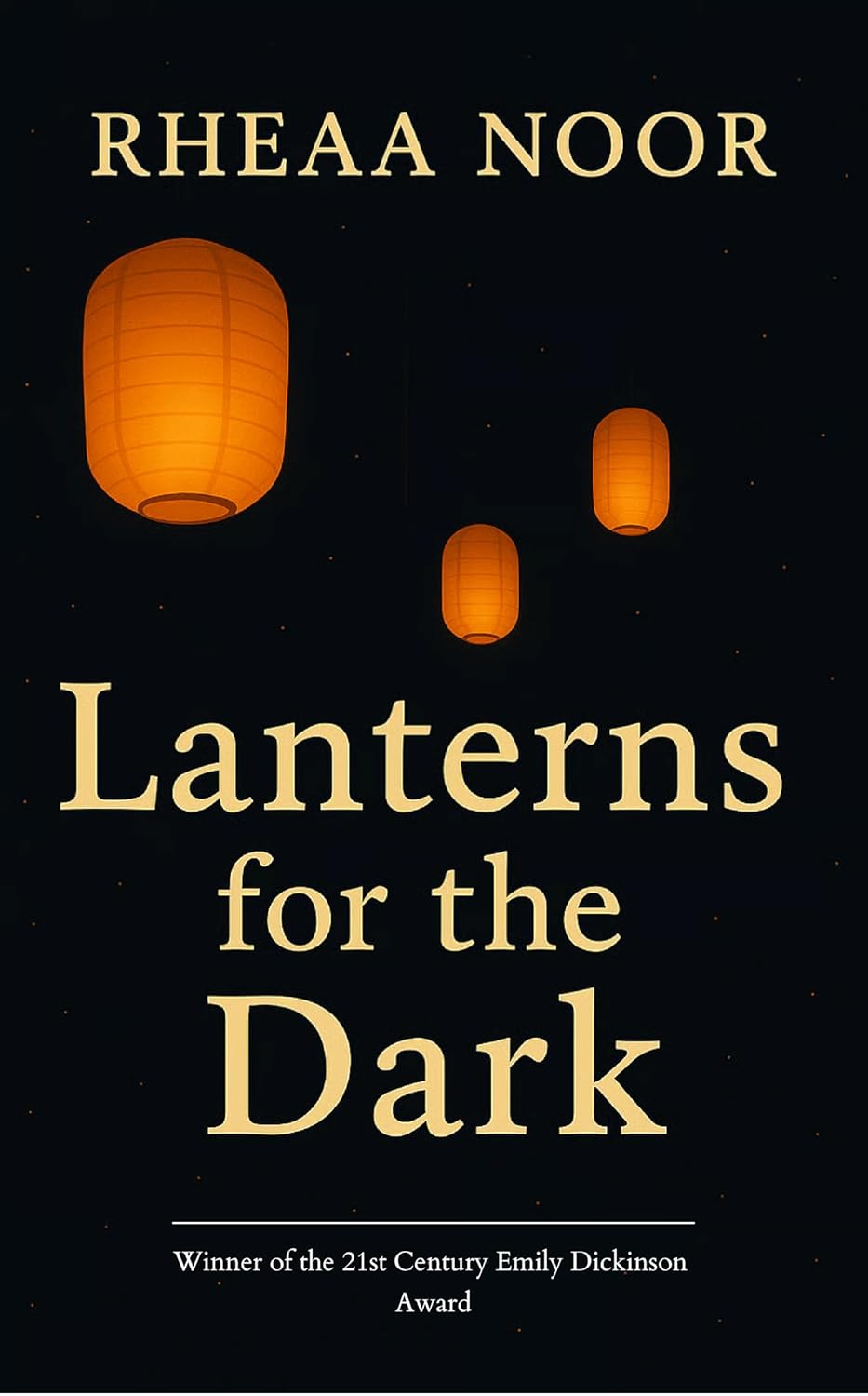
Rheaa Noor is a poet and novelist whose writing lives in the space between ache and tenderness. Her work is rooted in memory, silence, and the emotional landscapes of women who love beyond what they are allowed to say. She is the author of two poetry collections, Lanterns for the Dark and When Silence Roared: Poems from Bhutan, both noted for their atmospheric voice and emotional depth. Rheaa writes to make quiet love visible the love that survives, endures, and returns in echoes.
Get your copy here – https://amzn.to/48uuW3V
Also Read: Book Review: Lanterns for the Dark by Rheaa Noor – A Tender Companion Through the Unseen
Interview
Q) What was the first spark that led you to begin writing Lanterns for the Dark?
It did not begin with a spark. It began with exhaustion. I felt tired of carrying everything silently. One night, I opened my notes app because I did not know what else to do with the heaviness. I wrote a few lines just to breathe. Those lines felt like small lanterns in a very long night. That is how the book began.
Q) Was there a specific moment that made you realise these poems needed to become a book?
Light, for me, is not brightness or positivity. Light is relief. It is the moment when the pain loosens its grip. It is the breath you finally take after holding everything inside. Light is the reminder that you can get through today, and maybe you can get through tomorrow as well.
Q) Many poems feel deeply personal. How did you navigate vulnerability while writing them?
I stopped trying to look strong. For a very long time, I wrote around the wound instead of writing into it. With this book, I wrote as if no one was watching. That is when the real truth came out. Honest. Messy. Unfiltered.
Q) Which poem was the hardest for you to write emotionally and why?
The hardest pieces were the ones that made me sit with truths I had avoided for years. Anything that made me confront my loneliness or my heartbreak or the parts of myself I kept hiding took the most out of me. They were difficult not because of the words but because of what I had to feel in order to write them.
Q) The Strong and The Softness celebrates resilience wrapped in gentleness. What inspired this piece?
My relationship with my own softness. I spent years believing that softness made me weak. But my softness survived things that should have broken me. This poem reminds me that gentle people carry a strength the world does not always acknowledge.
Q) There is a quiet hopefulness throughout the book. Was that intentional or natural?
It was natural. Even when I am hurting, there is a small voice inside me that says, “Hold on.” That gentle voice found its way into the poems without me trying. Maybe I was comforting myself first.
Q) What emotion were you running from when you wrote this book, and did writing help you heal it?
I was running from abandonment. The fear of being left. The ache of being unseen. The habit of shrinking myself. Writing did not heal it completely. But it made the fear quieter. It helped me understand myself better.
Q) Do you write with a theme in mind, or do your emotions guide the structure of your poetry collections?
My emotions guide everything. I do not plan themes. I write what my heart is carrying that day. When I look back later, I see patterns forming on their own.
Q) What does your writing routine look like? Structured or intuitive?
Completely intuitive. I write when something pulls me. In cars, at midnight, while waiting for water to boil. Poetry arrives in moments, not schedules.
Q) How do you decide which poems make it into a book?
If a poem makes me pause even for a second when I read it again, it goes in. If it feels like something I wrote only to release a personal weight, I keep it private.
Q) Which poets or authors have influenced your voice the most?
My life has shaped me more than anything. But I feel connected to Mary Oliver for her gentleness, Warsan Shire for her honesty, Gulzar for the way he reaches the heart, and Rupi Kaur for her simplicity. Still, my strongest influence will always be my lived experiences.
Q) Your poems offer comfort, almost like lanterns. What do you hope readers hold close after finishing the book?
I want them to feel less alone. Not inspired. Not pushed. Not told to be stronger. Just understood. If someone closes the book and feels they can breathe again, that is enough for me.
Q) Has any reader response moved you deeply?
Yes. Someone told me, “I finally slept after weeks because of one of your poems.” I will carry that message with me forever.
Q) If your book could sit in someone’s life at the right moment, what moment would that be?
The moment right before a breakdown. The moment when they are swallowing tears. The moment when they are exhausted from pretending. That is where I want this book to sit. Quietly. Without asking anything from them.
Q) Are there themes you still want to explore in future writing?
Yes. Longing. Self-discovery in your forties. Loving again after heartbreak. Healing childhood wounds. The slow and often invisible courage it takes to start over.
Q) What is one message you wish the world would hear through your poetry?
Soft hearts are not weak. They are simply brave in a different way.
Q) If Lanterns for the Dark were adapted visually, how would you imagine it?
Slow. Intimate. Minimal. Muted colours. Rain on the windows. Warm lamps in quiet rooms. A soft voice reading the lines like a confession. Something that feels like sitting alone with your own heart but without the fear that it will break.
Get your Book Reviewed by Vidhya Thakkar – Connect us Now