This post contains Amazon affiliate links. If you buy through one, I earn a small commission at no extra cost to you. It never changes what I write about a book.
Author: Vikram Solanki
Publisher: Notion Press
Genre: Mythology, Spirituality, Mythological Non-Fiction
Pages: 58 pages
Ideal for: Readers interested in Indian mythology, Shukracharya, Hindu mythology, astronomy and spiritual journeys.
Summary
Shukra’s Tapasya: The Light from the Underworld by Vikram Solanki explores Shukracharya’s intense tapasya, his connection with Lord Shiva and the mysterious planet Venus. Blending Indian mythology with astronomy, scientific observations and reflective insights, the book looks at themes of transformation, rebirth, sacrifice and going beyond the visible. It is a short, lyrical read that offers a fresh perspective on Shukra and Venus.
Review:
“I do not orbit like the other ones, because I remember. I remember what it means to be torn apart and reformed.”
We all know Venus as the planet of love, but there is an eternal bond between divine struggle and cosmic wonder that makes Venus a mysterious planet. We all know Shukracharya, but do we know about his tapasya? What made him Shukra, and what made him related to Venus? Shukra’s Tapasya: The Light from the Underworld by Vikram Solanki explores Shukracharya’s tapasya – what made him choose the path he was on, how he rose through this penance, and how he became connected to the planet Venus.
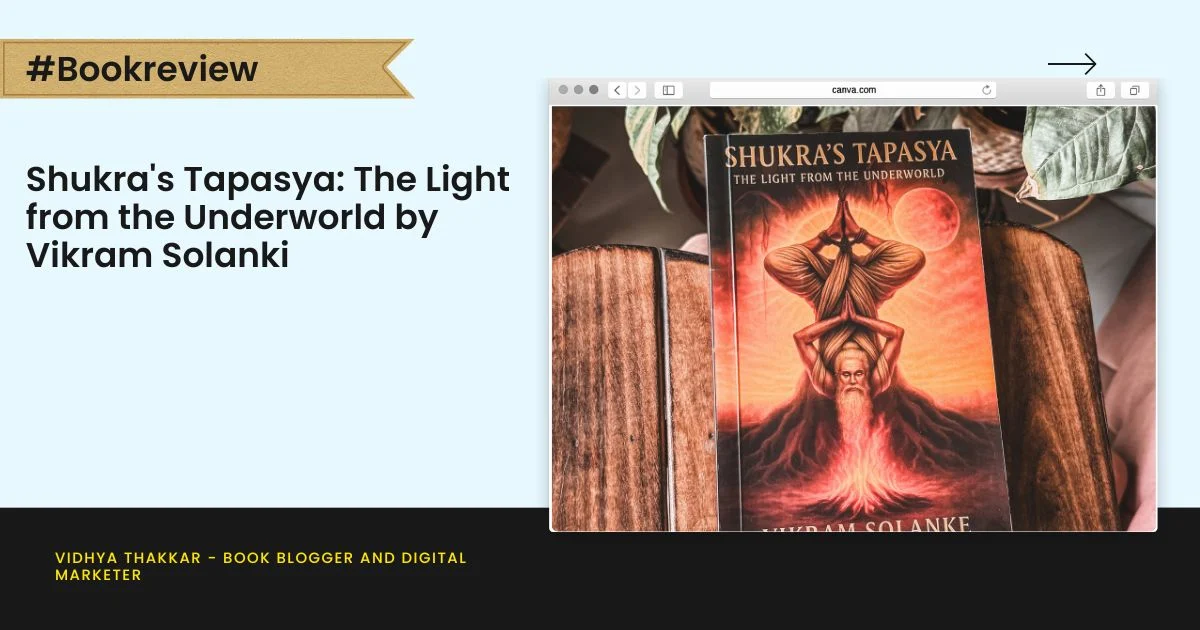
Shukra’s tapasya takes place under the gaze of Lord Shiva, and as his penance becomes increasingly difficult, we see how far he is willing to go in his pursuit. One of the striking images from his penance is Shukra suspended upside down from an ancient banyan tree, enduring smoke and fire. This vow of inversion becomes an important part of his journey – of breaking patterns, going against the flow, and looking beyond what appears on the surface. And we see how Venus becomes his silent companion because of its mysterious movement.
His journey also takes him towards Mrit Sanjeevani, the knowledge associated with reviving the dead, bringing another dimension to the themes of death, rebirth and transformation. We witness the challenges he faces and eventually how Lord Shiva grants him the power and the boon he seeks. We also see Shukra’s friendships, his interactions with different people, and his bond with his students. These moments add another layer to his journey and show us the person behind the penance.
I also liked the way Vikram has narrated Shukra’s journey. The story moves from one stage of his tapasya to another, and with every chapter, the penance becomes more intense. The pacing keeps you curious about what comes next, while the tone remains mysterious and thoughtful, which fits the story of Shukra and Venus beautifully. Since the book is short, the journey doesn’t feel overwhelming, and it is easy to follow.
His connection with Venus becomes equally fascinating. Venus’s mysterious cycle of disappearing and reappearing becomes a silent companion to Shukra’s journey, offering him reflections on change, transformation and the illusion of control. There is something beautiful in the idea that sometimes we need to step away from what is visible to understand what lies beneath.
What makes the narrative interesting for me is that it doesn’t feel like a straightforward retelling of Shukracharya’s story. There are moments of mythology, moments that make you think about Venus, and then the scientific notes that give you another way to look at what you have just read. I liked these little shifts because they kept the reading experience engaging and made me pause rather than simply read through the story.
What I really loved is how Vikram shares his account of the penance along with scientific notes and reflections that ask readers certain questions and make them think. This is really interesting. His writing style is lyrical and captivating, making this journey a memorable one. The way each chapter makes Shukra’s penance more and more difficult keeps the story engaging. There are so many things we learn as we read this book. I also liked how the scientific observations are woven into the narrative rather than presented separately. They give us another way of looking at the mythology, particularly when the book draws parallels between Shukra’s experiences and Venus’s unusual characteristics. Not to forget the pictures that the author has added, which add to the overall experience of the book.
Each chapter connects and increases Shukracharya’s penance, but I really wish there were more details to it. At around 58 pages, it is a very compact exploration, and I often felt that some of the ideas deserved to be explored further. I would have loved more details about Shukra’s journey, his transformation, and the mythology surrounding his connection with Venus.
What also makes Shukra’s journey interesting is the reason behind his pursuit. His tapasya is not simply about power; it is driven by a deeper desire that gradually shapes the choices he makes and the path he takes. The title, The Light from the Underworld, also stayed with me because the book constantly plays with the idea of finding light through darkness, struggle and transformation. Shukra’s journey isn’t simply about enduring darkness; it is about what he discovers within it.
In all, it’s a different read, and I loved how the scientific notes and reflections make it relatable for readers. What stayed with me most was the idea that disappearance can sometimes be a part of transformation that stepping away from the visible flow may help us discover a deeper undercurrent. It is a thought that stayed with me long after I finished the book. Shukra’s Tapasya: The Light from the Underworld is a short but intriguing exploration of Shukracharya, his tapasya and his connection with Venus bringing together mythology, astronomy, symbolism and reflection in a way that makes you look at a familiar planet a little differently.
Get your Book Reviewed by Vidhya Thakkar – Connect us Now
Frequently Asked Questions (FAQs)
1. What is Shukra’s Tapasya about?
Shukra’s Tapasya: The Light from the Underworld explores Shukracharya’s intense penance, his connection with Lord Shiva, and his association with the planet Venus. The book brings together mythology, astronomy, symbolism and reflection.
2. Is Shukra’s Tapasya a mythology book?
Yes. It explores the story of Shukracharya through Indian mythology while also incorporating scientific observations and reflections about Venus.
3. What is the connection between Shukracharya and Venus?
The book explores the fascinating connection between Shukra and Venus, including Venus’s mysterious movements and cycles and how they become part of Shukra’s journey.
4. What makes Shukra’s Tapasya different?
The book combines mythology with astronomy and scientific reflections. It doesn’t only tell Shukra’s story but also encourages readers to pause and think about ideas such as transformation, rebirth, control and going against the flow.
5. Who should read Shukra’s Tapasya?
It is ideal for readers interested in Indian mythology, Shukracharya, Venus, spirituality, astronomy, and short books that offer reflective ideas alongside mythology.
Reader_viddh’s Take
Shukra’s Tapasya is a short and unusual read that brings together mythology, Venus and scientific reflections in an interesting way. I loved the lyrical writing, the progression of Shukra’s tapasya, and the questions the book leaves you with. The idea of disappearing, going against the flow and discovering what lies beneath stayed with me the most.
Also Read:
Book Review: Parshurama by Kevin Missal – A Thrilling Mythological Epic
Book Review: Letters to Krishna by Bhakti Buddy – Letters Filled with Love, Longing and Devotion
Book Review: The Gita for Gen Z by Rania Sen – A Modern Guide to the Bhagavad Gita