This post contains Amazon affiliate links. If you buy through one, I earn a small commission at no extra cost to you. It never changes what I write about a book.
About The Author
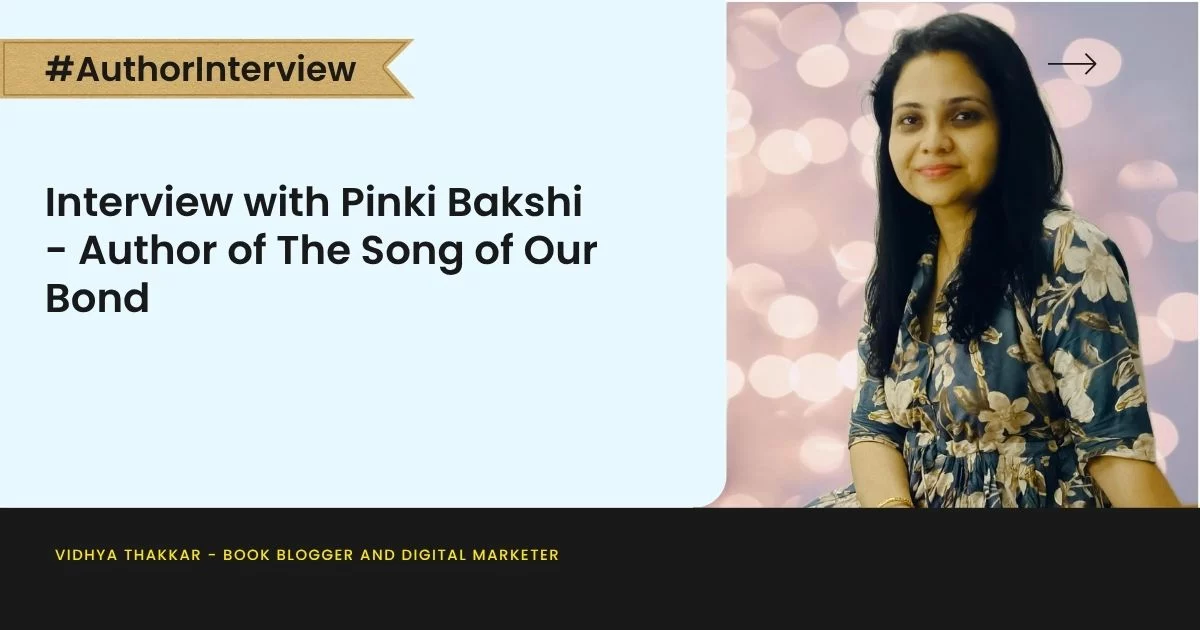
Pinki Bakshi is a storyteller at heart and loves to navigate through the complex emotions of people and the poetry of life. She is a content writer by profession with extensive experience in research and writing. Pinki’s oeuvre reflects her strong empathy and her mesmerised interest in the intimate and social spheres. She is also a passionate blogger and an avid reader who writes about mindfulness, nostalgia, and life lessons on her blog (https://chetnanirvana.art.blog). Her writing is filled with emotion, colourful storytelling, and it has a way of making readers feel personally invested. As a devoted mother and a lifelong learner, she draws inspiration from the chaos and beauty of everyday life, because that’s where the real stories live.
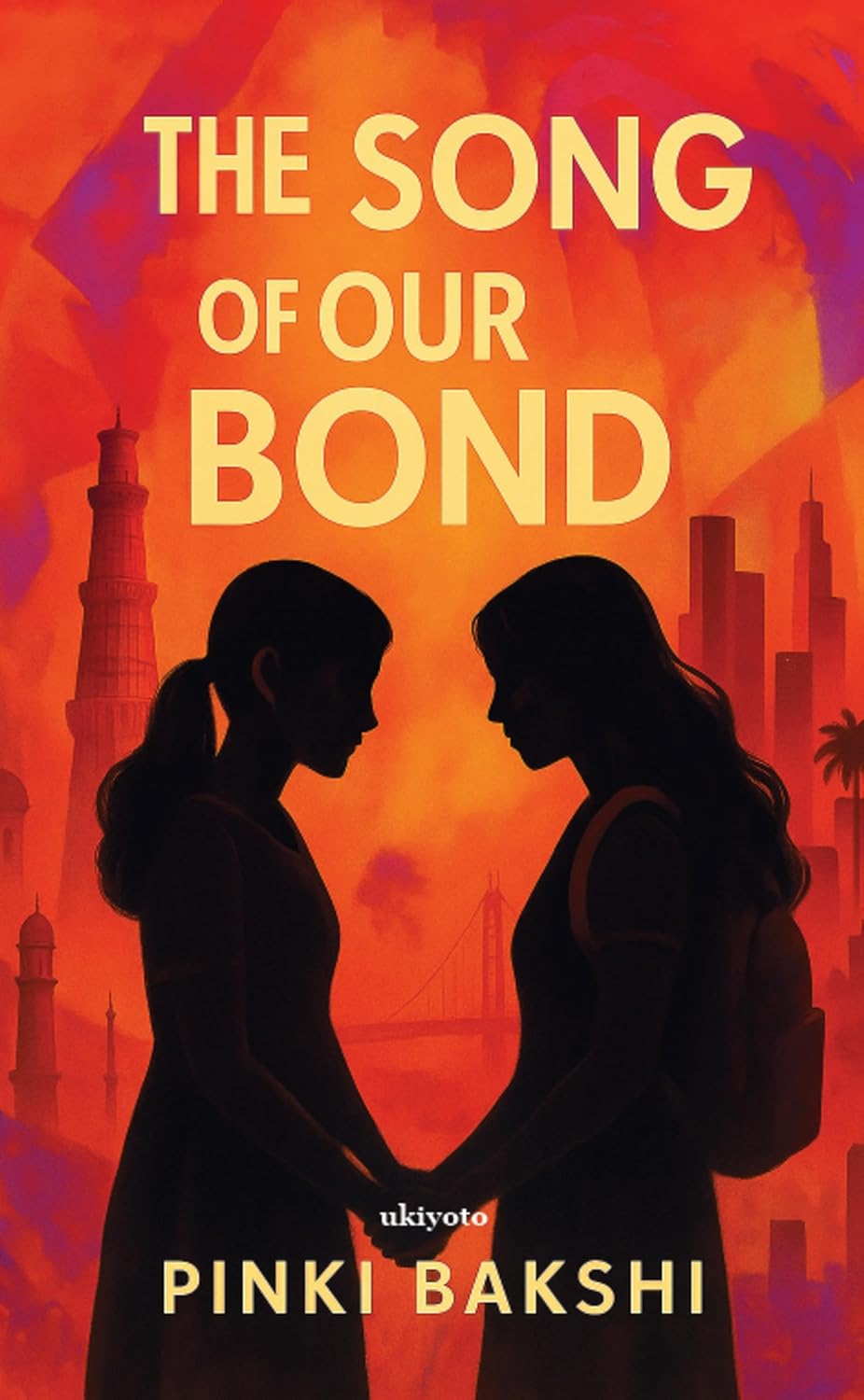
Get your copy here – https://amzn.to/3LeHvZ5
Also Read: Book Review: The Song of Our Bond by Pinki Bakshi – A Heartwarming Tale of Friendship and Memories.
Interview
Q) What inspired you to write The Song of Our Bond? Was it based on any real-life friendships or experiences?
I grew up listening to stories from my mother and grandmother about the Khurda Road locality. The neighbourhood, its people, their vibrant everyday life, as well as the riots that left lasting memories. My mother has a childhood friend named Kasturi. Their friendship isn’t dramatic, but the fact that they’ve remained friends from childhood to this day really inspired me. The Song of Our Bond is a work of fiction, but it draws deeply from these real experiences and emotions, particularly the idea of friendships and bonds that endure despite life’s challenges.
Q) The story beautifully captures the simplicity of the pre-Internet era. Why did you choose to set the story in that time period?
I grew up in that pre-Internet era and also heard so many stories from my mother and grandmother about it. Life was slower, simpler, and connections were built on patience. Unlike today, where instant messaging keeps us constantly connected, back then, distance really tested relationships. I wanted to capture that world, where bonds were nurtured through letters, long waits, and sheer faith in each other: something that’s hard to recreate in today’s digital age.
Q) The book touches on both personal friendship and larger social tensions (Oriya-Bengali riots). How did you balance these two themes?
For me, the friendship was always at the heart of the story. The riots and social tensions became the backdrop; they added depth and realism, but I didn’t want them to overpower the human connection. I tried to show the tenderness, the loyalty, and how bonds are tested. But friendships don’t exist in isolation; they are shaped by the society and times in which they unfold.
The Oriya-Bengali riots were an undeniable reality of that period, and they provided a powerful backdrop against which to explore the fragility of human connections. By weaving the personal and the political together, I wanted to highlight that even in moments of division and unrest, the human spirit seeks connection. The larger social tensions give the story its weight, but the friendship keeps it alive with warmth and hope.
Q) Meena and Kasturi’s friendship feels very real. How did you develop their characters?
Meena and Kasturi grew out of real memories and observations. I borrowed a few details from people I’ve known, like the way my mother spoke about her childhood friends, and even my own school days. I looked forward to my friendship with my childhood friends, especially Ankita—the mischiefs, the little moments in school—and those memories shaped how I wrote Meena and Kasturi. But I also gave them space to grow as fictional characters. Meena carries some of my own reflections, while Kasturi has shades of people I’ve admired. Together, they feel authentic because they’re rooted in both lived experiences and imagined emotions.
Q) If you had to describe Meena and Kasturi in one word each, what would they be?
If I had to capture them in single words, Meena would be “introspective.” She embodies sensitivity and reflection, someone who observes life deeply and allows her inner world to shape her choices. She’s always reflecting, questioning, and carrying the weight of memory.
Kasturi, on the other hand, would be “resilient.” She symbolises quiet strength, the kind of endurance that helps one adapt to new places, new lives, and yet carry the essence of old bonds within.
Q) Readers often wish to see Kasturi’s perspective more deeply. Was there ever a version of the story where we got more of her side?
That’s such an interesting observation, and honestly, I did think about Kasturi’s perspective while writing. But I chose to keep the story largely through Meena’s eyes, because I wanted readers to feel her longing, her reflections, and her way of remembering the bond. Kasturi’s silence, in a way, adds to the mystery and depth of their friendship. But the very fact that readers want more of Kasturi speaks to her quiet strength. Her silences are not absences; they are spaces where the reader’s imagination enters.
Q) Your writing is simple yet evocative—was that a conscious choice to keep the story light and accessible?
Yes, it was a conscious choice. I wanted the story to feel natural and relatable, so readers could immerse themselves without feeling weighed down by heavy language. At the same time, I aimed to evoke emotions subtly through small moments, gestures, and memories so that even a simple sentence could carry depth and resonance. I wanted The Song of Our Bond to feel approachable and immediate, allowing readers to experience the story’s lightness and its quiet poignancy at the same time.
Simple words, simpler times, and emotions that linger forever.
Q) What part of the book was the most challenging to write?
The most challenging part was writing the ending. Even though the story is mostly told from Meena’s point of view, I wanted to reveal Kasturi’s inner dilemma—her guilt over the years and the effort it takes to reconnect with Meena. Writing that delicate balance of struggle, hope, and persistence was tough. She fails, but she never gives up. Portraying her struggle authentically, showing that bonds require effort to survive, and capturing the tension between failure and persistence was emotionally demanding. And whether she ultimately succeeds is for the readers to discover.
Q) How do you personally approach weaving emotions into your narrative without making it heavy?
I have always been someone who lives in nostalgia and feels emotions very deeply, and that reflects in my writing. I focus on the small, everyday moments—the glances, the letters, the little gestures—that carry big emotions. Instead of explaining feelings in long passages, I let the moments speak for themselves. That way, the story feels emotional but still light and relatable.
I believe emotions are most powerful when they’re understated. Instead of heavy descriptions, I allow gestures, memories, and pauses to convey the depth of feeling. My blog, Cerebration – Think with body, mind, and soul.., captures much of my personal reflections and the emotions that shape my perspective.
Q) What do you hope readers carry with them after reading The Song of Our Bond?
In today’s world, where patience and faith often hang by a thread, I want readers to travel back to an era where bonds were nurtured through time, trust, and silence. In this fast-paced life, I hope the story prompts them to pause and appreciate the beauty in small, simple things, and to truly connect with the people who matter.
At its heart, this book is also an ode to children who witness conflict and violence, yet find the courage to move forward, to rise above pain, and to still believe in love, friendship and how even when the world around them fractures, the heart still finds a way to hope. The strength, the innocence that survives even in chaos, a renewed sense of empathy, a little more patience, and the urge to reconnect are what I hope readers carry with them.
Q) Do you think friendships today, in the digital era, are different from the ones portrayed in your book?
Yes, friendships today are different, and that’s the beauty of every era. The need for at least one meaningful connection will always remain, no matter the time. In the digital era, staying in touch is easier and more immediate than ever, which is wonderful. Still, it can sometimes be challenging to capture the depth and patience that older forms of communication naturally required. The Song of Our Bond reflects a time when letters carried emotions, silence spoke volumes, and bonds grew stronger with time and effort. I hope it reminds readers of the enduring power of connection, while celebrating the unique ways friendships thrive today.
Q) The book emphasises how memories keep people alive within us. What does memory mean to you in your personal life?
As I mentioned earlier, I am a person who lives in nostalgia. For me, memories are the threads that hold life together. They are not just fragments of the past but emotions preserved in time. I often find myself revisiting moments – my school photo album, scrapbooks that we were crazy about after each class session, new year and birthday greetings from friends- and each of them brings back a part of who I was.
Q) If you could rewrite or expand one part of the book, which would it be and why?
Honestly, the book turned out just the way I envisioned it. I wanted to focus on the moments that shaped Meena and Kasturi the most—their childhood and youth—so the emotions remain intimate and authentic. If I were to expand further, I would explore their adult lives to show more of their personal growth, careers, and challenges, to offer readers additional slices of their journey.
Q) Do you see yourself writing more stories on friendship and relationships in the future?
Right now, I feel a little empty after finishing The Song of Our Bond. What I write in the future will depend on the inspiration that strikes me. But I feel that, in some way, relationships and connections will always influence my work. Even if I explore poetry or any other genres, it’s hard to separate storytelling from the bonds we share. It’s always at the heart of what moves us.
Q) What advice would you give aspiring writers who want to capture emotional yet simple stories like yours?
My advice would be to observe life closely and feel it deeply. The smallest gestures, quiet moments, and everyday emotions often hold the most meaning. Don’t overcomplicate your writing—let it be simple, honest, and authentic. And most importantly, write from a place of empathy and curiosity; the more you connect with your characters’ emotions, the more your readers will feel them too.
Get your Book Reviewed by Vidhya Thakkar – Connect us Now